


Tendai Nyambara
Urban farmers in Mpopoma are grappling with increasingly unpredictable rainfall and prolonged dry spells that have disrupted traditional planting calendars. While some have adopted conservation agriculture techniques, most continue relying on conventional methods.
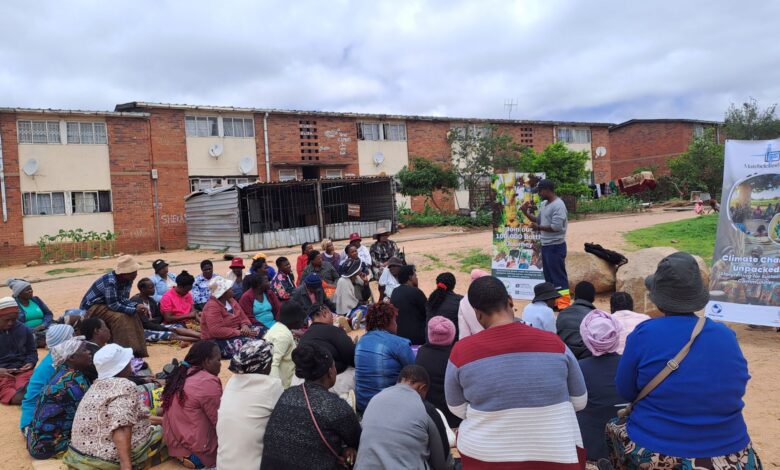
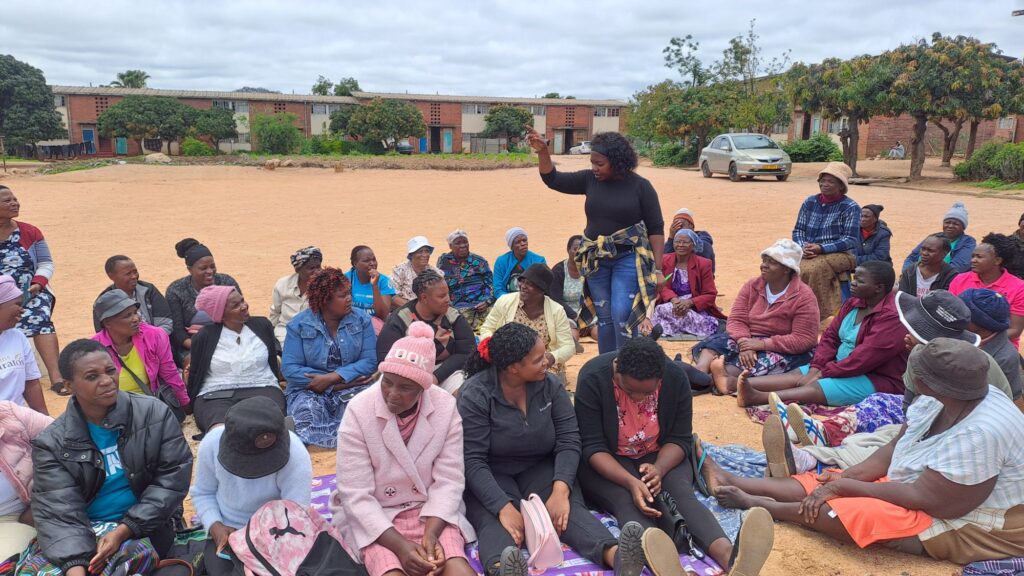
This challenge came into sharp focus at a recent Climate Change Unpacked community meeting held on Wednesday by Matpulse and Zambezi Eco Sprouts, where only 16 out of 50 women reported using the Intwasa/Pfumvudza conservation method. The remaining two-thirds still practise conventional farming to plant maize.

The women cited the labour demands of Intwasa as the primary barrier to wider adoption, noting that the method is strenuous. Dorica Joseph, among the few using the system, said that although it improves yields, it requires significantly more effort.
“I use the Intwasa farming method, and in the past years I have managed to get a better harvest despite erratic rains, but the method is physically demanding,” she said.
Another resident who relies on the intwasa added that the workload associated with Intwasa discourages many women who are already stretched by household responsibilities and ongoing water challenges.
Farmers at the meeting described how increasingly unpredictable weather patterns have shaken their confidence in traditional planting knowledge.
“The weather patterns are no longer predictable. The rains are erratic and the heat is now intense,” said Joseph. “We can no longer determine the planting season using traditional knowledge such as imbolisamahlanga (early transitional spring rains), which would first rot maize stalks before we planted. There is no longer any certainty of rain. Once it rains, we quickly plant our maize. This has resulted in us losing seeds and sometimes having to plant twice. Because farming is now a gamble, we plant half of the garden first, monitor, and plant the other half later,” Joseph noted.
Duduzile Sibanda expressed concern about the collapse of seasonal order. “When we were growing up, we used to sing about summer, autumn, winter, spring – but now it’s no longer following that order. You cannot even tell when summer begins or when winter ends. This confusion has cascaded to us being confused about the farming season. We no longer know when to plant maize and when not,” she said.
Sikhangenzile Sibanda added that inconsistent rainfall and intense heat have forced repeated planting. “Sometimes the maize germinates and its scorched by the sun or there is too much rain and it floods the field. We end up losing the crops and planting the same field twice or even thrice in one season,” she said.
Despite slow uptake, gradual shifts are emerging. Another resident, Julia Ndlovu, said she experimented by dividing her field in two planting one section using Intwasa and the other using conventional methods.
“I subdivided my land last year, one side I planted using Intwasa and the other I used the conventional method. The Intwasa side outperformed the conventional side, yielding enough maize to eat and surplus for maize meal,” she said.
Several women also explained that they practise mixed farming to buffer against losses, planting crops such as sweet potatoes, beans, butternut and sugar cane alongside maize.
Elizabeth Phiri shared complementary climate-smart practices, including the indigenous “three sisters” system. “For urban resilient farming try intercropping maize, beans and squash. It helps you improve soil fertility and conserve water. You can also practise conservation farming by using all crop residues and cut weeds as ‘chop and drop’ mulch instead of burning them. This helps maintain soil moisture and builds organic matter. If you face flooding, create raised ridges to ensure proper drainage and prevent waterlogging, but for drought resilience, make effort to adopt gatshompo,” said Phiri.
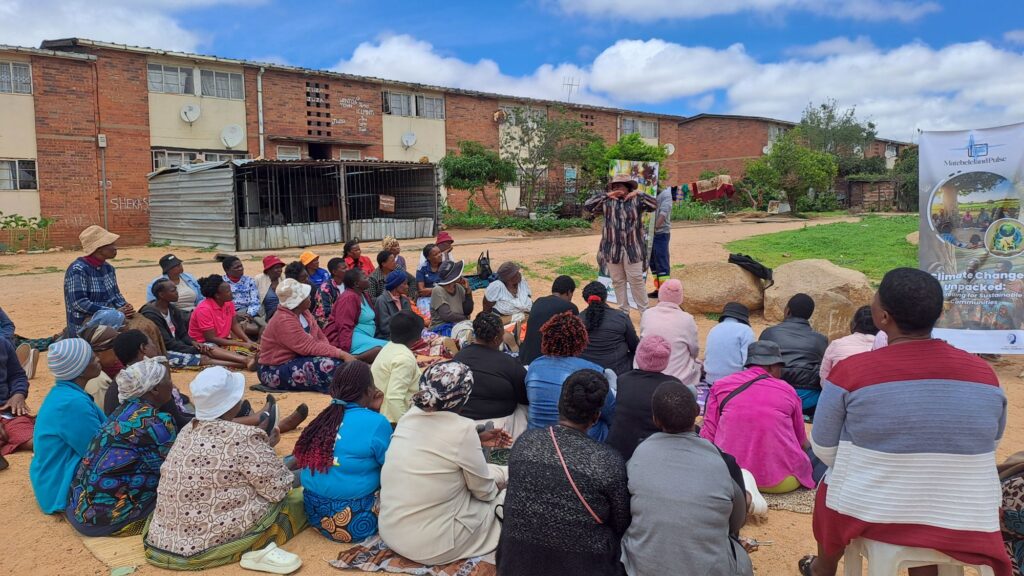
Jacqueline Ndlovu used the platform to remind residents of Bulawayo City Council’s urban agriculture bylaws.
“Some of us plant in illegal areas where the city council does not permit us,” said Ndlovu.
“It is important that we follow the City of Bulawayo’s urban agriculture bylaws. We must not cause environmental damage, pollution or degradation in the process of carrying out urban farming within the municipal area. Farming in wetlands, along streams or in undesignated areas is prohibited to prevent flooding, pollution and safety risks,” she added.
The meeting concluded with a showcase of innovative urban agriculture solutions. Phathisani Vundla of Zambezi Eco Sprouts demonstrated his low-cost aeroponic system, built from recycled plastic bottles, which grows leafy vegetables using 90–95% less water than traditional soil-based methods. In water stressed Bulawayo where many areas receive piped water only two days a week, the innovation generated immediate interest.
“Sitting at home unemployed, I developed an aeroponic system using discarded plastic bottles. This soil-less farming method uses 90–95% less water, which reduces stress and supports food security in a water-scarce city like Bulawayo. I now grow up to 2,000 heads of lettuce and 400 heads of spinach at a time, earning a steady income. I source organic manure for my plants from neighbours who give me chicken and rabbit manure, so basically I rely on local resources. You can join me too and generate an income for yourself and ensure food security for our community,” he said.
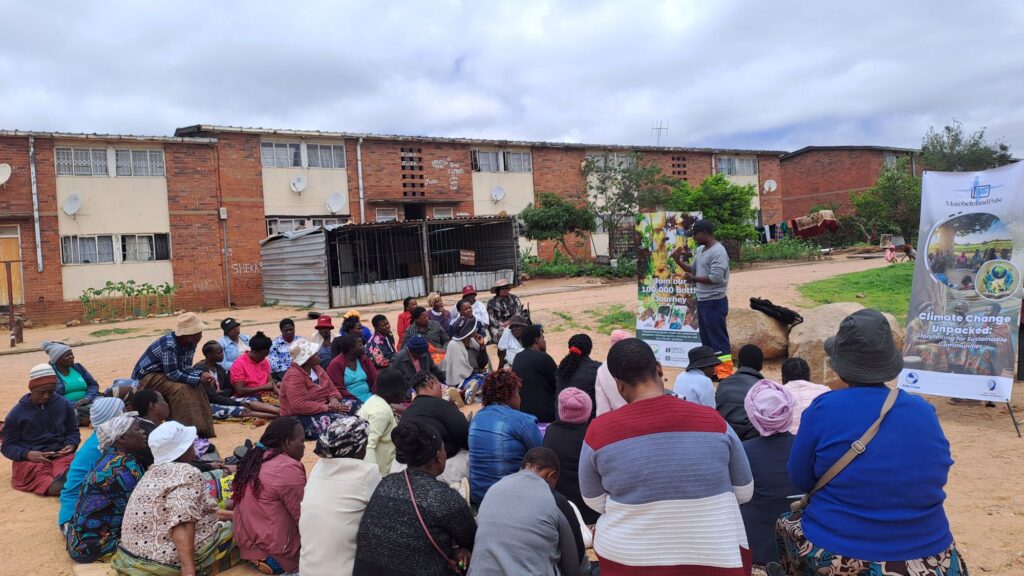
The women expressed strong interest in joining Vundla’s “100 000 Bottle Journey,” which encourages residents to collect discarded plastic bottles and set up their own aeroponic systems. Vundla committed to hosting a “look-and-learn” session to help women integrate the technology into their backyard gardens.