
When the rains fail: Climate crisis pushes rural families to the brink

Thembelihle Mhlanga
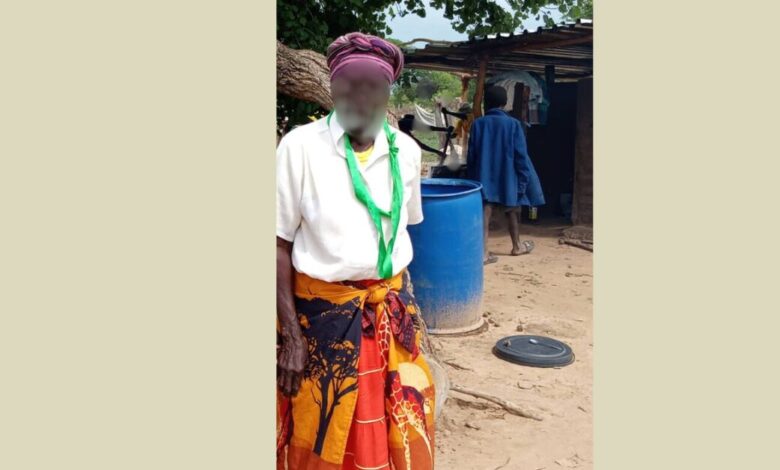
In Mazwa village, located in the drier areas of Matabeleland North, Gogo Rita Ngwenya, an 81-year-old widow, works daily to support her family against the persistent effects of climate change. With two orphaned grandchildren, aged 15 and 17, depending on her, Rita’s situation illustrates how environmental degradation translates into immediate economic and social hardship in rural communities.
Gogo Ngwenya’s recollections contrast sharply with the present reality. “I remember when my cattle used to graze freely, and the rains were enough to fill the granary. Now, the sky stays dry, and the drought has taken everything, my cattle, my crops, and almost my hope,” she states.
For her, the recurrent droughts constitute a persistent crisis that threatens the viability of traditional rural livelihoods. As precipitation becomes more erratic, her efforts in farming have become a daily effort against unpredictable environmental conditions.
Gogo Ngwenya describes the difficulties of subsistence farming in the area. Despite digging the soil by hand, the high temperatures and dry spells often lead to crop failure. “I cultivate what little I can myself. But the sun is unforgiving, and the rains are never on time. Sometimes, I get a handful of maize or groundnuts, sometimes nothing at all,” she explains.
The loss of her cattle represented a significant blow to the family’s economic stability. In this community, livestock typically serves as a primary financial asset and security mechanism. Their death due to prolonged drought conditions has removed her main buffer against financial vulnerability, eroding her sources of income from sales and harvests.
The economic pressure resulting from climate impacts directly affects the future of Gogo Ngwenya’s grandchildren. Diminished income has rendered paying school fees impossible, forcing her two grandchildren who were attending Form 1 and Form 3 to drop out of secondary school.
“It broke my heart to make them leave school, but we had no choice,” she says. “Feeding us all was more important than books.” This widespread challenge has significant implications for development, as continuity in education is widely recognized as essential for breaking cycles of poverty in rural Zimbabwe.
In response to the loss of educational opportunities, Gogo Ngwenya’s grandchildren have sought income through artisanal mining. “They help in small-scale mining because it is the only work they find nearby. It’s dangerous, but what else can they do?” she says.
Artisanal mining often operates informally and carries associated risks, including exposure to health hazards, potential exploitation, and legal complications. However, this pathway highlights the desperate need for income in the absence of viable agricultural employment.
Gogo Ngwenya has also employed indigenous entrepreneurial methods to supplement the family’s income, selling indigenous chickens and crafting baskets and mats. “The chickens sell fast at the market, and I learned how to weave from my mother. It helps a little, but it’s not enough to cover all our needs.” These efforts underscore the role of traditional skills and local resources in providing a measure of resilience, even as they fall short of meeting total needs.
Gogo Ngwenya’s family’s experience is consistent with broader trends across Zimbabwe’s rural communities. Reports from the Zimbabwe Meteorological Services Department indicate that shifting rainfall patterns and rising mean temperatures are intensifying drought cycles.
Experts emphasize that Zimbabwe faces compounded challenges, including the interaction of water scarcity, diminished soil fertility, and crop failures with pre-existing socioeconomic issues such as poverty and limited access to public services.
A local education officer familiar with the area highlights the long-term societal consequences of rising dropout rates: “When children leave school prematurely, society loses talented individuals, and poverty becomes entrenched.” Similarly, social workers express concern regarding the increased risks faced by children involved in informal employment like artisanal mining, stressing the necessity for community-supported, safer economic alternatives.
Local NGOs and community advocacy groups are currently pushing for enhanced climate adaptation strategies. These include the implementation of drought-resistant seed varieties, the expansion of water harvesting technologies, and the creation of formal income diversification programs.
These initiatives aim to reduce the vulnerability experienced by households such as Gogo Ngwenya’s. However, scaling up these adaptation measures is frequently slowed by infrastructural limitations and resource constraints within the region.
Despite these complex challenges, Gogo Ngwenya remains focused on her family’s immediate needs. “I do what I can, every day, to care for my grandchildren and keep hope alive. Our land may be dry, but my love for them is deep.” Her story provides a crucial qualitative perspective on the quantitative data surrounding climate change, poverty, and educational access in rural Zimbabwe.