
23 000 BaTonga People Were Removed From the Zambezi for Kariba Dam. Six Decades Later, Binga Is Still Zimbabwe’s Forgotten District.

Peter Moyo/Valencia Ndhlovu
Simuuze Munkuli has been fishing Lake Kariba since he was twelve years old. Every morning before dawn he pushes his wooden boat into water his grandparents were removed from, casts his nets, and waits. The lake stretches endlessly before him — one of the largest man‑made reservoirs in the world, a body of water whose dam generates over 2,000 megawatts of electricity for millions of Zimbabweans and Zambians. Simuuze’s home village in Binga District still has no reliable electricity.
“We gave everything to this water,” he says, pulling in his nets in the grey early light. “And the water gave nothing back to us.”
His words carry the weight of nearly seven decades of history.
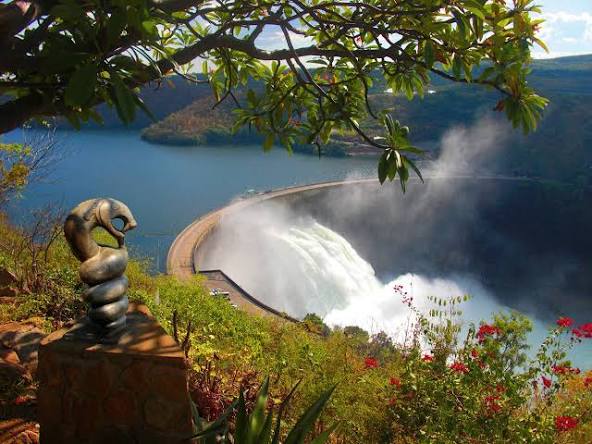
Between 1957 and 1962, approximately 23 000 BaTonga people were displaced from the fertile southern banks of the Zambezi River to make way for the rising waters of Lake Kariba, formed by the construction of Kariba Dam. They called themselves basilwizi — people of the great river. They were resettled in the arid, infertile uplands of what is now Binga District in Matabeleland North, land that research has consistently described as ecologically hostile: low rainfall, poor soils, extreme heat, and wildlife that competed with them for what little the land offered. The Zambian government compensated its approximately 34,000 displaced BaTonga with 270 USD per person. The Zimbabwean BaTonga received no meaningful monetary compensation beyond limited rations and basic resettlement support.
Sixty‑seven years later, the data tells the story of what that displacement cost.
Binga District sits in Matabeleland North Province, sharing a border with Zambia to the north and bounded by Kariba, Gokwe South, Lupane, and Hwange districts. The Food and Nutrition Council’s Binga District Profile places the area firmly in Zimbabwe’s Natural Regions IV and V — the harshest agro‑ecological classification in the country, characterised by low and erratic rainfall, high temperatures, and soils that make sustained crop production deeply precarious. The Zimbabwe National Statistics Agency’s 2017 Poverty Update, cited by the Zimbabwe Peace Project, ranked Binga as the second most impoverished district in Zimbabwe, with approximately 50.1 percent of households classified as extremely poor.
The situation has not meaningfully improved. The Zimbabwe Vulnerability Assessment Committee’s 2023 rural livelihoods assessment estimated that about 62 percent of households in Binga would be cereal insecure during the peak of the 2023/24 lean season — one of the highest district‑level rates in Matabeleland North. FEWS NET’s food security outlooks for 2024/25 place Binga’s livelihood zones among areas of highest humanitarian concern nationwide, projecting Crisis‑level food insecurity outcomes to persist well into 2025.
Across the lake from Simuuze’s fishing camp, Netsai Moyo has been trying to grow pearl millet in soil she describes as sand. She plants every season. She has never once harvested enough to carry her family through to the next rains.
“We plant because we have no choice,” she says. “We plant and we pray. Most years the rains come too little or the elephants come first.”
Human‑wildlife conflict is not a figure of speech in Binga. Chizarira National Park and Chete Safari Area border communities throughout the district. Elephants, baboons, lions, and hyenas are not distant wildlife, they are neighbours who destroy crops, kill livestock, and occasionally kill people. Communities describe crop raids as a routine feature of the farming calendar, not an exceptional event.
What makes Binga’s situation distinctly complex is the gap between its natural wealth and its human poverty. Lake Kariba is one of Zimbabwe’s primary sources of freshwater fish, with artisanal fishing concentrated along its shores, including Binga’s. Chizarira National Park and Chete Safari Area represent significant tourism assets. The district sits on a national boundary that gives it strategic trade potential with Zambia. And yet formal employment in fishing, tourism, and other industries remains extremely limited, and the communities closest to these resources often benefit from them least.
The mobile network reaches approximately 60 percent of the district, according to the Food and Nutrition Council. Research published in 2024 confirmed that no vocational training institution exists in Binga, and the Binga District Profile similarly notes that there is only one farmer training centre in the district, further marginalising young people from any pathway into skilled employment. The majority of livelihoods remain dependent on rain‑fed agriculture, small‑scale fishing, livestock, crafts, and the collection and sale of forest products — a livelihood base that has remained essentially unchanged for decades and that climate change is systematically dismantling.
There are signs of intervention. A UNDP programme called CAWEP, funded by the UK government, has brought the Saba Green Valley Irrigation Scheme to the Mlibizi community — a 20‑hectare solar‑powered irrigation scheme run under the ARDA V30 Accelerator model and benefiting 185 farmers, according to UNDP documentation. UNDP and government reporting indicate that associated investments have solarised local infrastructure, including schools, and supported clean water systems and the refurbishment of ZINWA water reticulation in the area. Chief Saba of Binga, speaking at the programme’s launch, described it as long overdue. “Most of our schools were not electrified and the community relied on river water,” he said. “This programme has brought the much‑needed development in our area.”
But analysts and civil society organisations have raised consistent concerns about whether donor‑funded interventions address the structural roots of Binga’s poverty or simply manage its symptoms. Research published in the Journal of Governance and Regulation found that NGO poverty reduction strategies in Binga were inadequate and ineffective precisely because they were built on insufficient understanding of the actual conditions of people’s lives. A more recent study in Discover Sustainability, examining several wards in Binga, found that donor‑funded projects were not addressing the root causes of food insecurity given the district’s fundamental environmental constraints — poor soils, low rainfall, and climate volatility that no irrigation scheme or solar panel fully resolves.
Simuuze pushes his boat back to shore as the sun rises fully over the lake. His catch is modest. Liquidity challenges, constrained buyer demand, and high operational costs have squeezed the fishing economy consistently over the past two years, mirroring wider economic stress. He will sell what he can at below‑normal prices.
“This lake made Zimbabwe rich,” he says, securing his boat. “Ask them what it made us.”
It is a question Binga has been asking since 1957. The data suggests it is still waiting for a real answer.