
Bulawayo’s Mafakela Taskforce Sets Standard for Grassroots Environmental Action

Tendai Nyambara
In Bulawayo’s Luveve and Gwabalanda communities (Ward 16), the Mafakela Health and Environment Taskforce (MHETF) has emerged as one of the city’s most organised and impactful grassroots environmental initiatives. Formed in February 2022 as a direct response to a public health crisis, the Taskforce is helping to reduce pollution, curb illegal dump sites, and strengthen climate resilience in the area.
The initiative was born from tragedy. MHETF project manager Ishmael Mnkandla recalls how a diarrhoea outbreak hit the community in 2020–2021 after residents consumed contaminated water.
“In 2021, we lost 13 residents after they drank contaminated water and environmental issues were raised,” said Mnkandla.
The incident exposed deep sanitation challenges and the vulnerability of communities facing unsafe water and poor waste management. “That tragedy showed us the importance of proper hygiene and the need to promote sanitation and cleanliness in our community,” he added.
Rather than waiting for municipal assistance, residents organised themselves. “We realised moving forward we had to be proactive and not wait for assistance,” Mnkandla said. “We had to take responsibility, promote environmental cleanliness, and protect the health of our community.”
From this resolve, the MHETF was formed a community-led effort focused on reducing environmental hazards that fuel waterborne diseases.
Today, the taskforce has grown into a coordinated network of more than 180 members, most of them women. Their operations follow a structured environmental intervention model designed to keep the community clean, safe, and climate-resilient.
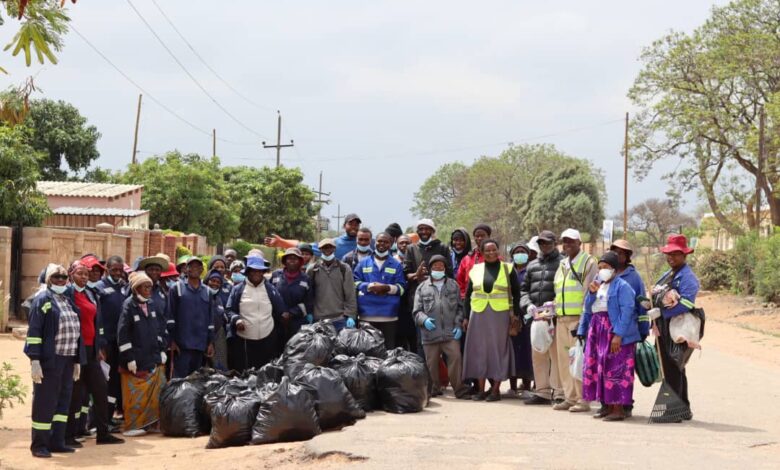
“Our core mission is to maintain a clean, healthy, and safe environment for every resident,” Mnkandla said. “We have over 180 active members, and about 80 to 90 percent of them are women. They are the backbone of this initiative. We run monthly, bi-weekly, and even weekly clean-ups in high-risk zones, and we work in schools, clinics, and shopping centres.”
The team’s activities include: removing plastic and general litter, clearing drainage systems to prevent flooding. Cutting long grass in areas prone to waterlogging and conducting ad hoc clean-ups to support overstretched municipal services. These interventions directly tackle climate-linked vulnerabilities. Blocked drains worsen flash floods, unmanaged waste contributes to disease outbreaks during heatwaves, and overgrown vegetation becomes a hazard during the rainy season. The Taskforce works ahead of crises, mitigating risks before they escalate.
Over time, the MHETF has expanded beyond cleaning to strengthen local economic resilience. Through the Integrated Skills Approach (ISA), members now operate small home industries producing floor polish, petroleum jelly, and other household items for income generation.
The organisation has also become a formal player in the recycling value chain. “After receiving training from the Environmental Management Agency on waste separation, EMA linked us to our waste buyer, Skies Recyclers,” Mnkandla said.
The Bulawayo City Council recently allocated the group a permanent waste collection centre in Chigumira Business Centre. Here, members bring recyclable materials to be weighed, recorded, and stored before being purchased by Skies Recyclers. “The system now provides a steady income stream for participating residents,” he added.
For Mnkandla, the strength of the movement lies in consistent daily actions. “Every small action we take picking up litter, planting a tree, or teaching others helps our community become stronger against the effects of climate change,” he said. “We may not change the whole world at once, but we can protect the place we call home, step by step.”
This year, the Taskforce has recorded several major achievements that align with Zimbabwe’s national environmental agenda.
“On 6 November, we partnered with EMA, the Forestry Commission, and Mafakela Primary School for composting training and tree planting,” Mnkandla said. “This supports national goals on soil health, food security, and climate mitigation.”
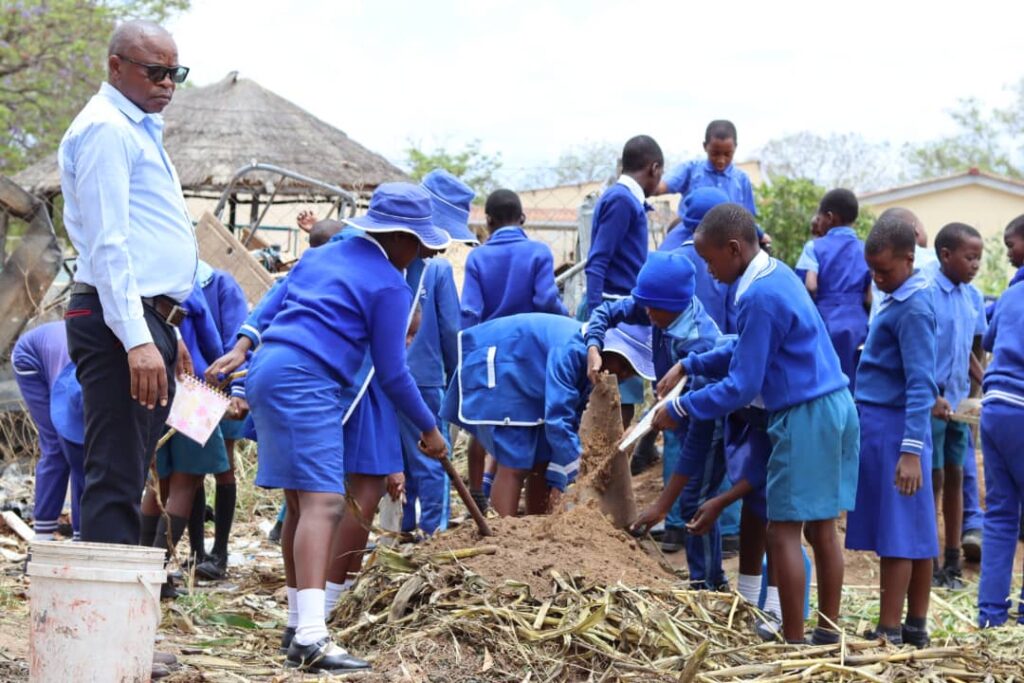
The following day, the MHETF joined the National Clean-Up Day, a campaign declared a permanent monthly event in 2022.“Taking part shows that communities have a crucial role in turning national policy into practical, local action,” he said.
In a city where waste management systems remain strained, the Mafakela Health and Environment Taskforce stands out as a model of how organised residents can strengthen resilience against environmental hazards. What began as a response to loss has transformed into a coordinated effort that improves public health, restores dignity to neighbourhood spaces, and empowers residents especially women with new economic opportunities.
For Mnkandla and the community he represents, the vision remains clear: protecting their future by taking charge of their environment today.