

Wild Africa and Tikobane Trust launch innovative whatsapp platform to combat human wildlife conflict in Makwandara

Thembelihle Mhlanga
In an effort to mitigate escalating human-wildlife conflicts in Makwandara village and its environs, Wild Africa, in partnership with Tikobane Trust, has unveiled WhatsApp chatboard platform designed for local communities.
This digital initiative aims to equip villagers with crucial knowledge and real-time guidance on safely managing encounters with problematic animals that frequently disrupt rural livelihoods and threaten both human and wildlife safety.
At the official launch ceremony, Farayi Chapoterera, Country Director for Wild Africa Zimbabwe, emphasized the transformative potential of this mobile technology in fostering coexistence between local people and wildlife. “This WhatsApp platform is not just a communication tool; it is a lifeline for our community,” Chapoterera remarked. “By providing automated prompts detailing the behavior and appropriate responses to different wildlife species, we empower our villagers to act intelligently and decisively in moments of conflict.”
The chatboard is distinctive in its user-centric design, delivered entirely in isiNdebele, the predominant local language, ensuring accessibility for all villagers regardless of literacy level or technological familiarity. “We recognized that effective conservation solutions must be rooted in local culture and language,” explained Chapoterera. “Facilitating understanding in Ndebele respects the community’s identity and enhances the practicality of this intervention.”
Ndlalende Ncube, Director of Tikobane Trust, applauded the partnership and underlined the platform’s anticipated impact not only in Makwandara but also in the surrounding rural areas. “Human-wildlife conflict has long been a bane to our villagers, disrupting their safety, agriculture, and daily lives,” Ncube stated. “This initiative represents a milestone in community-driven conservation efforts. The integration of modern technology with grassroots involvement creates a sustainable model for coexistence that other communities can emulate.”
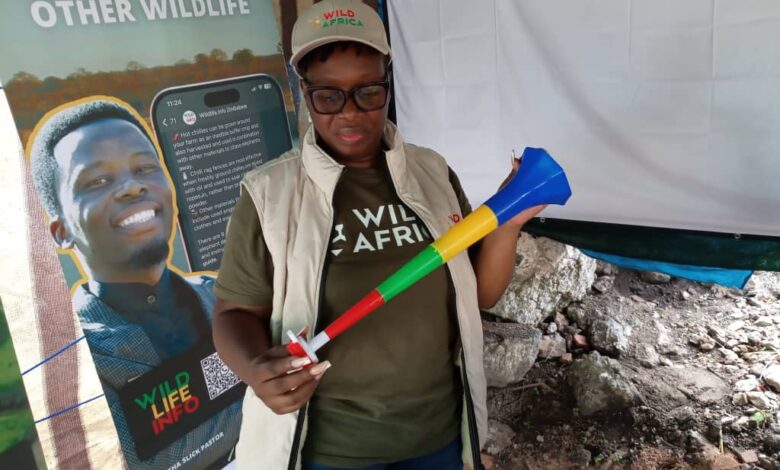
Beyond the digital solution, Wild Africa further bolstered the community’s ability to deter dangerous animal encounters by donating essential safety equipment during the launch. The package included a Starlink kit solar-lighting system to enhance night-time visibility, reflective jackets for improved personal safety, and vuvuzelas, which serve as an effective noise deterrent against wildlife encroachment. These provisions are expected to fortify the villagers’ protective measures, reducing the frequency and severity of wildlife-related incidents.
The introduction of this WhatsApp chat board arrives at a crucial time, as human-wildlife conflict intensifies across Zimbabwe’s rural landscapes, fuelled by habitat loss, climate change, and expanding agricultural frontiers. Villagers often face perilous confrontations with elephants, baboons, hyenas, and other species that raid crops and endanger lives, exacerbating socioeconomic hardship.
Chapoterera underscored the importance of knowledge and preparedness in confronting these challenges, urging full utilization of the platform. “Understanding animal behavior is the first step to safeguarding our community,” she asserted. “We call upon every villager to engage actively with the WhatsApp system—ask questions, learn the signals, and disseminate the information. This is a communal tool for communal protection.”
Ncube also highlighted the role that this initiative plays in strengthening broader ecosystem conservation efforts. “When local people are equipped to manage wildlife interactions effectively, it builds mutual respect and reduces retaliatory harm to animals. This project exemplifies how conservation and community well-being go hand in hand.”
Since its rollout, the WhatsApp chat board has garnered optimistic feedback for its intuitive interface and practical content. Villagers report increased confidence in handling wildlife encounters and greater awareness of available support channels.
As these digital and material resources integrate into daily life in Makwandara, the collaboration between Wild Africa and Tikobane Trust offers a hopeful blueprint for mitigating human-wildlife conflict, a persistent challenge threatening environmental sustainability and rural livelihoods throughout Zimbabwe.
The synergy between technology, community empowerment, and traditional knowledge reflects a forward-thinking approach that aligns conservation goals with the urgent needs of vulnerable rural populations.