
BVTO: Vendor Deaths Expose Deadly Cost of Bulawayo’s Stalled Market Infrastructure

orkers into congested traffic zones
Providence Moyo
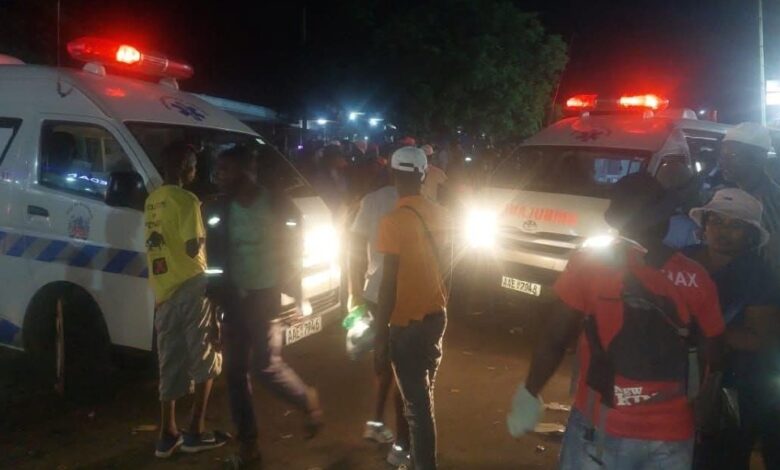
BULAWAYO – The two bodies lying on 6th Avenue on January 28, 2026, told a story that extends far beyond a traffic accident. Christopher Mukuwapasi and Lizwe Ncube, informal traders killed when a speeding kombi careened into pedestrians near OK Godini, became the latest casualties of a systemic failure that forces thousands of vendors to earn their livelihoods inches from moving traffic.
The tragedy has reignited fierce debate over Bulawayo’s chronic inability to provide safe, designated trading spaces—a failure that the Bulawayo Vendors and Traders Organization says is claiming lives in slow motion every day, and catastrophically when disasters like this strike.
“This heartbreaking incident once again exposes the extreme vulnerability faced daily by informal economy workers who earn their livelihoods in unsafe, unplanned, and congested public spaces,” BVTO said in a statement that reframed the accident not as misfortune, but as predictable consequence.
The Toyota Hiace kombi, driven by a 28-year-old man from Emakhandeni suburb, lost control between H. Chitepo and Lobengula Street, plowing into the crowded pavement where vendors display their wares alongside one of Bulawayo’s busiest thoroughfares. Seventeen injured traders were rushed to Mpilo Hospital. Police charged the driver with culpable homicide, citing excessive speed and failure to maintain proper lookout.
“The cause of the accident was due to speeding and failure to keep a proper lookout by the driver, hence a charge of culpable homicide was preferred against him,” said Bulawayo Police spokesperson Nomalanga Moyo.
But for vendor organizations and urban planning advocates, driver negligence tells only half the story. The other half lies in years of stalled infrastructure projects, particularly the perpetually delayed Egodini Mall, which was meant to relocate thousands of street traders into purpose-built, safe facilities away from traffic danger zones.
Instead, vendors remain compressed into narrow pavements and road margins, competing for space with heavy vehicular traffic and pedestrian flows. The congestion creates a volatile mix where a single moment of driver error can turn a trading day into a mass casualty event.
BVTO is now demanding that authorities treat this incident as a watershed moment, not just another statistic in Bulawayo’s road safety records. The organization is calling for accelerated completion of market hubs and comprehensive city-wide dialogue involving municipal authorities, central government, transport regulators, and trader representatives.
“We urgently call for completion of market hubs such as the long-awaited Egodini Mall, city-wide decongestion dialogue and decisive action, involving the City of Bulawayo, central government, transport authorities, traders’ representatives, and other relevant stakeholders,” the statement read.
The call carries particular weight given that informal trading is not a marginal activity in Zimbabwe’s urban economy, it represents the primary livelihood for hundreds of thousands of workers who have no alternative employment options. Forcing them to operate in hazardous locations is, in effect, a policy choice with life-and-death consequences.
Police have urged drivers to exercise greater caution, avoid excessive speed, and adhere strictly to traffic regulations. Authorities also called on owners of public service vehicles to employ only properly licensed, experienced drivers, a reminder of persistent concerns about standards in Zimbabwe’s commuter transport sector.
Yet even perfect driver compliance cannot eliminate the fundamental risk of placing dense concentrations of stationary traders directly adjacent to fast-moving traffic on congested urban streets. The collision of two urban failures—inadequate trading infrastructure and erratic road safety culture—creates conditions where tragedies like January 28 become virtually inevitable.
As investigations continue and the families of Mukuwapasi and Ncube prepare for funerals, vendor organizations are determined to prevent this moment from dissolving into the usual cycle of grief, official condolences, and inaction.
“Let this tragedy be a turning point—one that compels us to move beyond condolences to concrete action,” BVTO said, challenging authorities to finally confront the infrastructure deficits that turn everyday commerce into a gamble with death.
For the 17 survivors recovering at Mpilo Hospital and the thousands of vendors who returned to the same dangerous spaces the next morning, the question is whether Bulawayo’s leaders will treat these deaths as a catalyst for change, or simply as the price informal workers are expected to pay for earning a living.