



Listen Ndlovu
Augustus Siziba, widely known as SalesGuru, will launch his debut book Reflections of a Relentless Hustler on 12 September 2025. The release marks a significant milestone for Siziba, who describes the book as both a personal narrative and a guide for overcoming challenges.
“The book is really a mirror of my journey,” Siziba said. “I’ve lived the hustle, the sleepless nights, the sacrifices, the moments where giving up looked easier than going on. Behind every success story, there are scars, lessons, and silent battles people never see.”
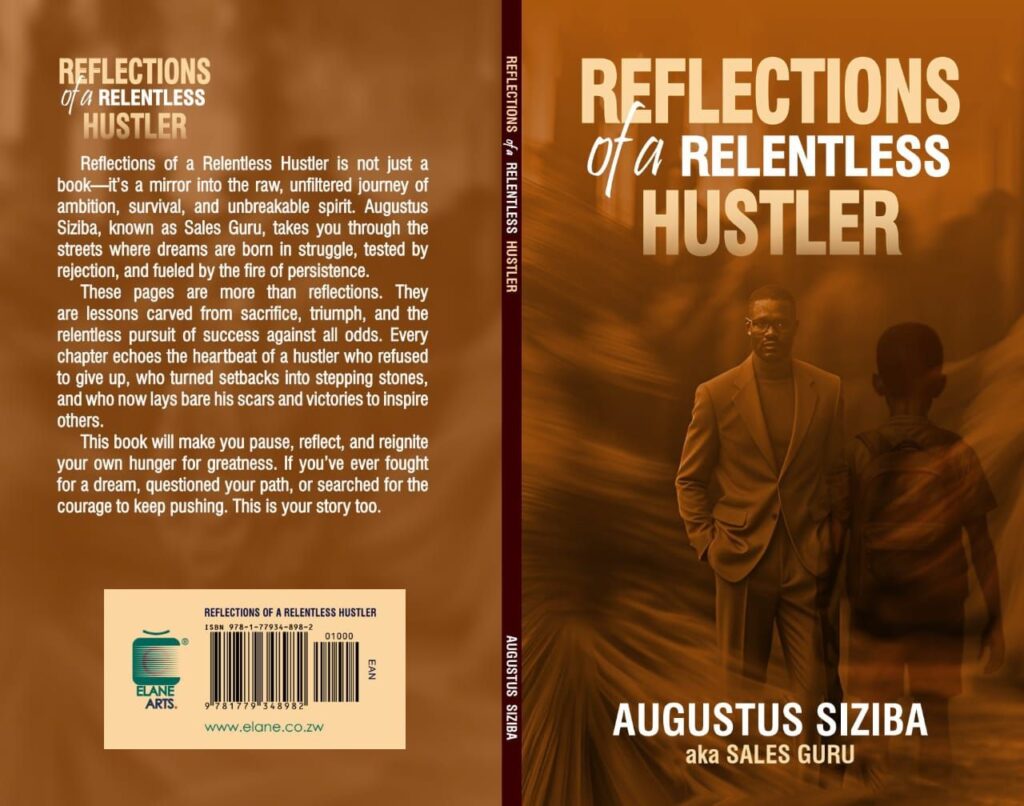
The book documents his experiences and the lessons he says sustained him through difficult times. According to Siziba, the central message is persistence. “Relentless speaks to that unshakable spirit,” he explained. “Where failure becomes feedback, obstacles become stepping stones, and dreams remain alive no matter how tough the journey gets.”
In the book, Siziba outlines key principles drawn from his experiences:
• Circumstances don’t define destiny. He recounts, facing limited opportunities, but stresses the importance of persistence.
• Consistency is more powerful than talent. Siziba argues that progress comes from daily focus and resilience rather than quick wins.
• Reinvention is survival. He emphasizes adapting to change while maintaining core values.
• Impact is greater than personal gain. He says his approach to “the hustle” includes creating opportunities for others.
“I want every reader to walk away knowing that their story, their grind, and their persistence can inspire and transform not just their own life, but the lives of many others,” Siziba said.
Beyond writing, Siziba is active as an entrepreneur, preacher, teacher, and business coach. He also performs under the stage name Gusto_zw, releasing music that reflects similar themes of resilience and hope. His tracks, including Ndigcine and Maramabadoro, have drawn on personal experiences.
“My songs are an expression of my inner self—my feelings, perceptions, and experiences I have lived through,” he said.
“In the same way that my book is a written reflection of my journey, my music is an audible reflection.”
Siziba’s upcoming single Jaiva Wena is scheduled for release in October. He describes it as “a celebratory track dedicated to those who love to dance, to release, and to embrace joy no matter what they’re going through.”
Following Reflections of a Relentless Hustler, Siziba has confirmed work on two more titles: Prepare! and Selling Without Selling – How to Make Money While Sleeping, planned for 2026.
The launch event on 12 September will provide attendees with limited copies of the debut book, with broader distribution details expected to follow. His music will continue to be available on digital platforms.