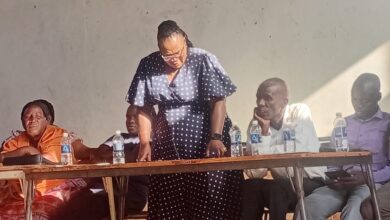

Nkulumane by-election: Ester Zitha, widow of late MP Desire Moyo, enters the race as an independent


Peter Moyo | Know your candidate series
BULAWAYO – As Nkulumane heads toward a crucial by-election on December 20, independent candidate Ester Excellia Zitha, widow of the late MP Desire Moyo, has entered the race with a message grounded in continuity, community care and a deep sense of responsibility.
Her decision to run follows a wave of public sympathy after the passing of her husband, who had become a respected and visible figure in the constituency. Zitha, speaking openly about her motivation, said she did not imagine stepping into politics so soon after his death, but felt compelled by the unfinished work her husband left behind.
“Stepping forward wasn’t something I planned,” she said. “But when my husband passed, I realised his dreams didn’t disappear with him. People kept coming to me, sharing how he had helped them, how he had inspired them, and I felt a powerful conviction: if I didn’t step in to safeguard that vision, a lot of what he started could be lost.”
Her entry introduces a strong emotional dimension to an already complex field, where several candidates are expected to emphasise development, service delivery and resident-focused priorities. Zitha, however, says her decision is not driven by ambition but by continuity and duty. “This isn’t just politics for me. It’s personal. It’s love. It’s legacy,” she said.
Zitha describes herself as a rooted member of Nkulumane, someone who has lived the daily realities of the constituency and who accompanied her husband at every stage of his community work. “I step forward today not as a stranger, but as a mother of this constituency,” she said. “My husband’s legacy lives here. I am here to serve, to listen, and to protect what we have built.”
While she clearly intends to preserve the spirit of unity and participation her late husband championed, Zitha also brings her own leadership perspective. She says she wants a constituency where leadership is accessible and people shape the agenda directly. “I believe leadership must be open, accessible and people-driven,” she said. “Residents must be able to question, contribute and follow what is happening in their community.”
She emphasises a constituency centred on care, dignity and practical service delivery, stressing that her approach is rooted in empathy and everyday experience. She has also stated that she intends to work strictly through the existing community structures, churches, civic groups and women’s organisations familiar to residents, viewing them as essential for continuity. “These are the foundations the late Honourable Moyo built and the ones the community trusts,” she said. “My role is not to replace them but to strengthen them.”
Zitha says the biggest challenge Nkulumane faces right now is the absence of representation after her husband’s death. She argues that the constituency needs a consistent advocate in Parliament to push for issues such as youth empowerment, access to healthcare, infrastructure upgrades, job creation and improved community safety. “Nkulumane needs a voice again,” she said. “If elected, I will work to restore effective representation and carry forward his vision with humility and determination.”
Her campaign is unfolding while she continues to navigate personal grief, something she openly acknowledges. She credits her strength to the support of her family and her late husband’s family. “They have carried me through this period of mourning with love, unity and incredible encouragement,” she said. “They keep me grounded and convinced that continuing this journey is a way of honouring his legacy.”
As Nkulumane prepares for the December 20 vote, Zitha’s final message to residents centres on continuity, shared responsibility and community pride. “Let us continue the legacy of the late Honourable Desire Moyo together,” she said. “I ask for your support, and together we will make Nkulumane proud again.”