
Volunteers Call for Investment After Completing Danangombe Restoration Campaign

Tracy Moyo
Volunteers who recently completed a week-long restoration campaign at Danangombe National Monument are calling for increased investment in infrastructure and conservation resources, saying the historic Rozvi site requires sustained support to realise its heritage and tourism potential.
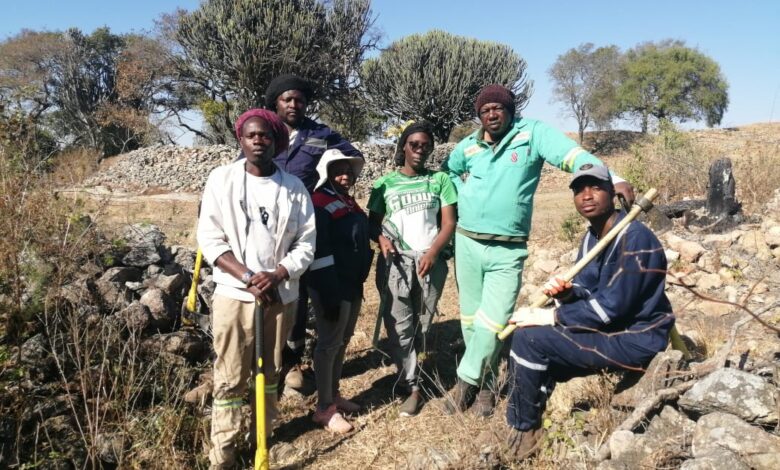
The campaign, held from July 12 to July 18, brought together the Zimbabwe Workers Association, descendants of the Rozvi royal lineage and the National Museums and Monuments of Zimbabwe (NMMZ) to restore sections of the national monument in Shangani, Insiza District.
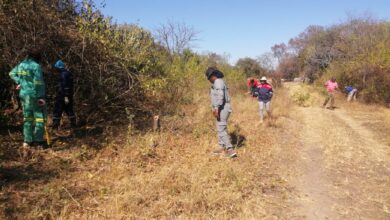
During the exercise, volunteers cleared invasive vegetation, including Lantana camara, reopened overgrown walking trails, trimmed trees and constructed fireguards to protect the ancient stone structures from veld fires.
While participants described the restoration exercise as successful, they said the site’s long-term preservation would depend on improved infrastructure, adequate equipment and continued community involvement.
Emmanuel Kanjoma, a direct descendant of the last Rozvi King, said preserving the monument was central to protecting the history and identity of future generations.
“Our goal is to preserve the legacy of Changamire Dombo. If we invest now, future generations will know who they are and where they come from, and we will revive the Rozvi heritage, traditions, and language,” said Kanjoma.
“The monument preserves extensive archaeological remains and is one of Zimbabwe’s significant treasures. We need both conservation and comfort—people must be able to learn, stay, and spend time there.”
Among the priorities identified by organisers are the drilling of a borehole to provide safe drinking water, construction of modern ablution facilities, kitchen gazebos, rehabilitation of existing resting huts and the establishment of a campsite for visitors.
They are also proposing the construction of an administrative office, employment of a qualified local tour guide and the development of cultural exhibitions showcasing traditional pottery, musical instruments and locally produced crafts. Other recommendations include linking Danangombe with the nearby Naletale National Monument through a structured tourism route and strengthening the site’s digital presence to promote its history.
Despite the progress made during the clean-up campaign, volunteers said limited resources affected their work.
“We are also requesting proper tools to carry out our voluntary work. We were relying on a few working tools provided by Mr. Kanjoma, and we had no gloves to deal with Lantana camara, which was a bit of a challenge,” said Chrispen Matsika, a volunteer with the Zimbabwe Workers Association.
Matsika said future restoration efforts should shift towards infrastructure development and improving visitors’ understanding of the monument.
“We wish that the next phase must focus on infrastructure, storytelling, and income generation so that Danangombe does not remain one of the country’s lesser-known sites, but takes its place as a pillar of cultural tourism in Matabeleland South,” Matsika said.
“We wish that there is installation of markers to identify kraals, residential areas, and the king’s quarters, fencing of the entire monument, and the rehabilitation of the burnt-down archive structure.”
Organisers said they plan to continue monthly community clean-up campaigns, capacity-building workshops and engagement with traditional leaders as part of efforts to strengthen heritage conservation and promote community participation around the monument.
Danangombe, the last capital of the Rozvi Empire, is one of Zimbabwe’s protected national monuments and contains extensive archaeological remains dating back several centuries.