
Fight Inequality Alliance Calls for Broadening of Wealth Tax, Higher Health Funding

Michelle Moyo
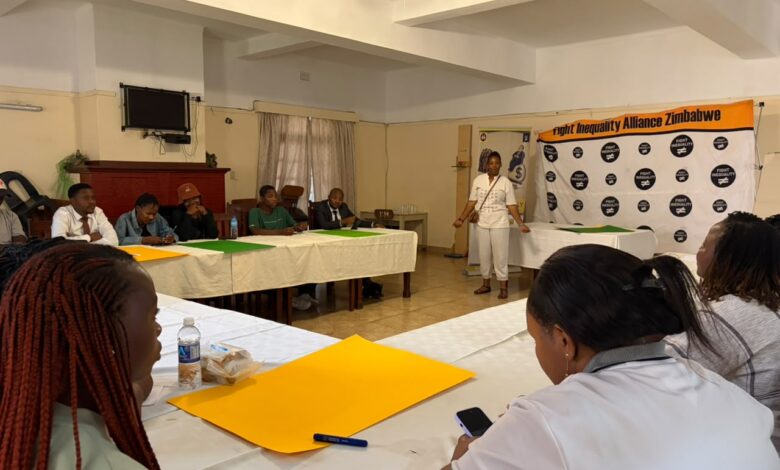
The Fight Inequality Alliance Zimbabwe (FIA) has called on the government to reform the tax system, including broadening wealth tax, while increasing funding for public healthcare.
The alliance says Zimbabwe’s tax system should place a greater burden on wealthier citizens while protecting low-income households from taxes it considers unfair.
FIA Zimbabwe is a network of organisations working on inequality issues and includes the Vendors Initiative for Social and Economic Transformation (VISET), Transparency International Zimbabwe, Women and Law in Southern Africa (WLSA) and residents’ associations.
FIA National Coordinator Nqobizitha Mlambo told Matabeleland Pulse that the Zimbabwean chapter is part of the global Fight Inequality Alliance, which he said was founded in 2016 by trade unionists and other civil society groups.
Mlambo said healthcare inequality was among the biggest challenges facing Zimbabwe, claiming that 90 percent of Zimbabweans rely on out-of-pocket payments to access healthcare.
“The FIA was created to challenge inequality across the world. The biggest obstacle we have in the country is health care inequality. 90 percent of Zimbabweans use what we call out-of-pocket expenditure to access health care. This is a result of under-funding the health sector for 46 years,” said Mlambo.
The alliance has been running the #FixOurHealthcareZW campaign since late last year, according to Mlambo.
“We are calling on every individual to demand that government invests in public health care. Through this petition, we have engaged several parliamentary groups and citizens to track how money is used and to monitor the national budget,” he said.
Mlambo said one of the alliance’s key demands ahead of the 2027 National Budget is for government to allocate 15 percent of the total budget to healthcare, in line with the Abuja Declaration. The 2001 declaration included a commitment by African heads of state to set a target of allocating at least 15 percent of annual budgets to the health sector.
“We are demanding that government explains how many health facilities will be built and renovated and how much will go to the national health fund so that citizens are covered by the State,” he said.
Dorcas Phiri, an FIA alumna, said the alliance was mobilising more people to join the movement amid unemployment and concerns over service delivery.
“We have more than 1,000 people who have joined the FIA movement. The biggest challenge is that many people are not fully informed about their rights, so there is need for awareness,” she said.
Gracia Mashingaidze, a member of FIA, said women and other vulnerable groups were particularly affected by challenges in the health system.
“We have visited many hospitals and noticed women suffering. The burden falls on women, including lactating mothers. Our social services do not have resources to cater for people with disabilities and other vulnerable groups. We want women and youths to participate fully,” said Mashingaidze.