

Jonathan Sibanda
VICTORIA FALLS — Anti-corruption agencies across the Southern African Development Community (SADC) are pushing for faster and more practical cooperation to trace and recover illicit assets across borders, as officials warn that delays in formal legal processes can allow funds to be moved beyond investigators’ reach.
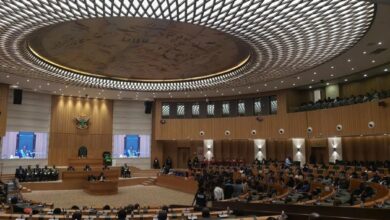
The issue took centre stage as anti-corruption agencies from across the SADC region gathered in Victoria Falls for a high-level dialogue held alongside the SADC Anti-Corruption Expo and Games.
The dialogue is being held under the theme “Beyond Boundaries: Harmonising Asset Recovery, Combating Illicit Financial Flows, and Securing SADC’s Economic Sovereignty through Regional Cooperation.”
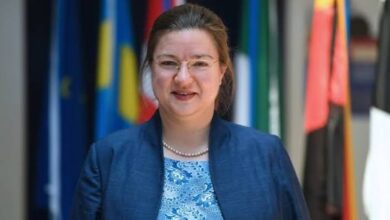
Deputy Director General for Policy at Botswana’s Directorate on Corruption and Economic Crime (DCEC), Tiriyaone Abigail Ezekiel, said jurisdictional limitations remained a major obstacle to cross-border investigations.
She said when an offence involves another jurisdiction, investigators generally have to rely on that country’s laws and formal procedures before continuing their investigations there.
“It can take ages for you to get a mutual legal assistance,” Ezekiel said.
She said delays could be particularly damaging in cases involving money laundering and illicit financial flows because funds could be moved rapidly between jurisdictions.
“By the time you get your orders, that allows you to go into another country to get the investigation, the money has already moved and you will not be able to recover whatever you wanted to, so it will be counterproductive.”
Ezekiel said SADC agencies were discussing ways to complement existing legal mechanisms with faster forms of informal cooperation.
She said this could include officials communicating directly with counterparts in other countries while formal legal processes continued.
“We can now have informal cooperation in terms of which I am able to give you a phone call or to have a meeting with you and see how best we can assist for the better of certain countries or for the better of our nations.”
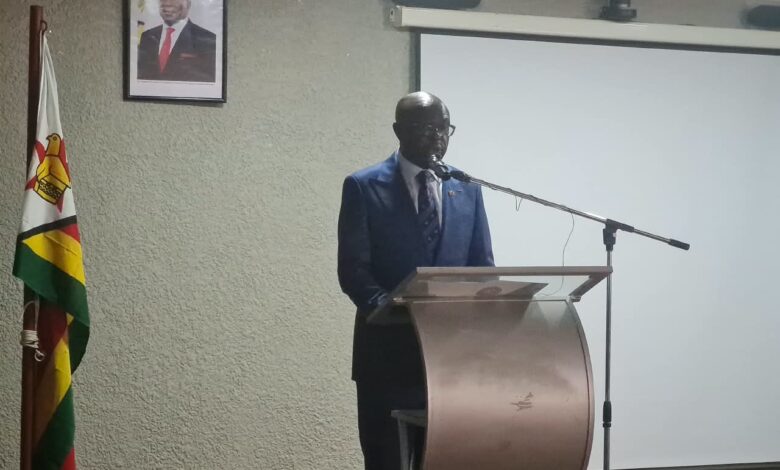
Her concerns echoed those raised by Zimbabwe Anti-Corruption Commission (ZACC) chairperson Michael Reza in his keynote address.
Reza said corruption proceeds increasingly move across national borders through financial institutions, corporate structures and intermediaries, making cooperation between jurisdictions important to tracing and recovering assets.
“We cannot effectively address illicit financial flows without following the money. Also, we cannot follow the money without effective financial investigations.”
He said asset recovery should form an integral part of the anti-corruption response, with investigators required to establish where illicit funds had gone, who had benefited, and where resulting assets were located.
“We cannot recover assets when our efforts end at our national borders.”
Reza said authorities could not effectively operate in isolation once a financial trail crossed a national boundary.
“Once the financial trail crosses a national boundary, no institution can act effectively in isolation.”
He said successful asset recovery could require authorities operating under different legal systems to share information, restrain assets, and work towards a common objective.
Regional cooperation was therefore central to effective asset recovery, Reza said.
He added that SADC’s economic integration, which facilitates the movement of trade, investment, people and capital, could also be exploited to move or conceal illicit proceeds.
The challenge, he said, was not simply whether regional cooperation mechanisms existed but whether they could respond quickly enough to modern financial crime.
“The question before us is therefore not simply whether cooperation exists. It is whether that cooperation is sufficiently timely, practical, and effective to meet the realities of modern financial crime.”
Reza said the relationships developed between officials during the SADC Anti-Corruption Expo and Games could contribute to stronger professional cooperation.
Asked what practical outcome he expected from the dialogue, he said personal relationships could make future communication between agencies more effective.
“Because of this interaction, I now know if I’m talking to Mr. X, we have interacted here. So therefore, when we then speak, we have a better understanding, there’s more rapport between the two of us.”
He said the professional relationships created through the event should extend beyond the sporting and social programme.
The high-level dialogue is a new component of the 2026 SADC Anti-Corruption Expo and Games programme. According to the organisers, it is intended to translate regional relationships developed through the Games, exhibitions, and professional interaction into more focused cooperation on financial investigations, asset tracing, asset recovery, and mutual legal assistance.
Ezekiel said the dialogue should not become another platform where existing challenges were discussed without follow-through.
The programme is expected to culminate in recommendations and priority areas for regional cooperation.
Reza similarly said the value of the dialogue would ultimately depend on whether it contributed to more timely, practical and effective cooperation between anti-corruption institutions.
Reza also said the event would leave behind infrastructure intended to benefit the Victoria Falls community.
He said ZACC had agreed to donate the newly constructed courts at Chinotimba Stadium to the Victoria Falls community after the Games.
“After these games we’ll donate the courts to the Victoria Falls community.”
Reza said the facilities would provide opportunities for government departments and residents to participate in sporting activities as part of broader health and wellness efforts.
He also identified a potential sports-tourism opportunity for the city.
“There might even be sports tourism. People from other countries might come and want to utilise our courts for purposes of practice and stuff like that and pay to Victoria Falls City Council.”
He said the courts, developed through cooperation between ZACC and the Victoria Falls City Council, represented a potential long-term benefit of hosting the regional event.
The event brought together anti-corruption practitioners and delegates from across the SADC region for sporting activities, exhibitions, and professional engagement.