

Bulawayo after ZITF: The promises and the people left waiting

As US$600 million in deals are announced, residents ask what trickles down to Luveve, Makokoba and Pumula
Peter Moyo
Sikhanyiso Dube has been selling vegetables from the same spot for eleven years. She watched the Zimbabwe International Trade Fair come and go last month — the suits, the flags of thirty-one nations, the motorcades — and she is still waiting to feel it.
“They say millions. I hear millions every year,” she said, adjusting the umbrella shading her tomatoes. “But my rent is still going up and my customers still have no money.”
Her scepticism is not unique in Bulawayo. It sits alongside genuine hope, the kind that flickers when real numbers are announced and real concrete is poured.
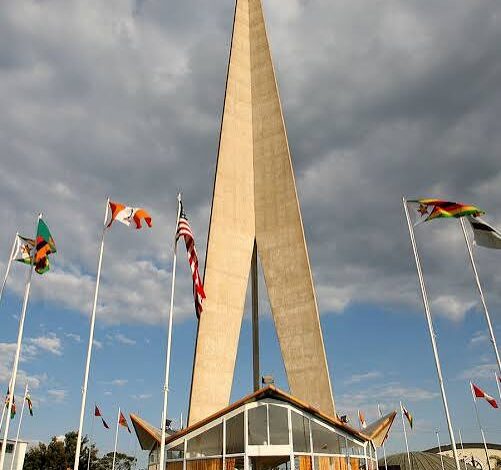
Speaking at a post-event media briefing on Sunday 26 April, Industry and Commerce Minister Nqobizitha Mangaliso Ndlovu announced that the 66th Zimbabwe International Trade Fair, held from 20 to 25 April at the Zimbabwe International Conference and Exhibition Smart City, had generated more than US$600 million in business transactions, confirmed orders and investment leads. Several Memoranda of Understanding were also signed in manufacturing and technology, with additional high-value leads expected to convert into firm commitments following due diligence.
The numbers were striking. A total of 812 exhibitors participated — 517 direct and 295 indirect — representing 31 countries. There were 123 first-time participants. The fair achieved a 104 percent space utilisation rate, exceeding the 48,655 square metres available and requiring a 2,100-square-metre marquee to accommodate 105 overflow exhibitors.
International participation stood at 133 exhibitors, down from 159 the previous year. Ndlovu attributed the decline to global geopolitical pressures. “I’m sure you would appreciate the challenges that are coming from the geopolitics that saw a number of our international exhibitors withdrawing,” he said.
On paper, it is an extraordinary achievement for a city that has spent two decades watching investment bypass it for Harare.
The most discussed announcement in the fair’s aftermath involves a development set to rise within the ZICES precinct itself. Terrace Africa, a property development company, is committing US$12 million to the Fairgrounds Retail Centre — a modern shopping complex of 7,000 square metres. ZITF Company board chairperson Busisa Moyo confirmed that construction is scheduled to begin within weeks, with completion targeted for the end of 2027.
“This is a symbolic day not only for the retail centre but for what is going to be created here in Bulawayo,” Moyo said.
Ninety-five percent of tenant space has already been taken up.
But in the city beyond the ZICES precinct, the mood is more measured.
Thandeka Moyo, 34, was retrenched from a textile firm in Belmont four years ago. She now works two part-time jobs and has been following the ZITF news closely. “I am not against development,” she said. “I am asking: what kind of jobs? Retail? Casual? Or real manufacturing jobs that pay school fees?”
“Let them build their retail centre,” said Mkhululi Sibanda, a builder who has been unemployed since January. “But do not forget that Bulawayo is also Nketa. It is also Tshabalala. It is also Pumula South.”
The gap between what is announced and what is experienced is not new. It is, in many ways, Bulawayo’s defining tension — a city with a proud industrial identity that has been patient for a very long time.
Minister Ndlovu himself acknowledged, during his briefing, that the theme of ZITF 2026 — Connected Economies, Competitive Industries — “was not a slogan, it was a practical call to action towards collaboration, regional integration, cross-border value chain development and stronger digital connectivity.”
Whether that call to action reaches Lobengula Street is the question residents here will be watching.