
Matabeleland’s 3 Provinces Recorded 10 Land Cases Combined, Harare Alone Had 156

Peter Moyo
Zimbabwe’s landmark Commission of Inquiry into illegal state land sales found Harare Metropolitan at the centre of the country’s urban land crisis, while all three Matabeleland provinces recorded the fewest cases of any region in the country.
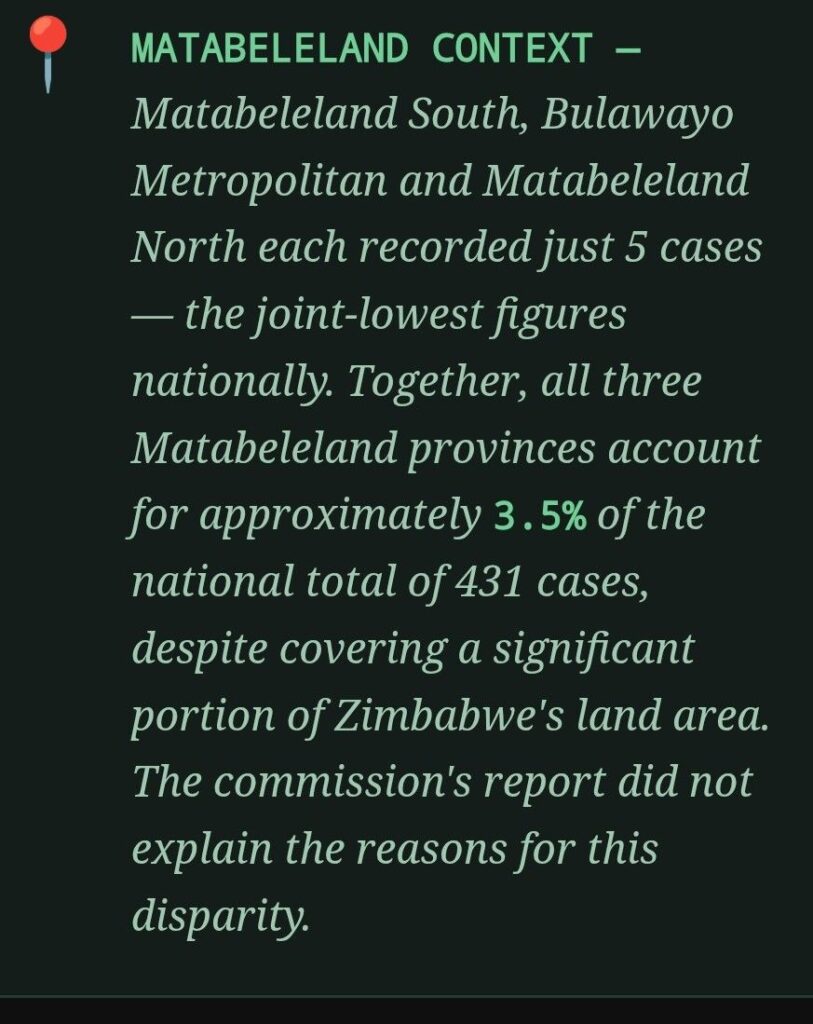
When Justice Tendai Uchena presented the findings of Zimbabwe’s most comprehensive investigation into urban land corruption, one regional contrast emerged above all others: Harare accounted for more than a third of all cases the Commission referred for prosecution, while Matabeleland South, Bulawayo Metropolitan and Matabeleland North each recorded just five cases — the joint-lowest figures of any province in the country.
The Commission of Inquiry into the Sale of State Land in and Around Urban Areas Since 2005 was established by President Emmerson Mnangagwa in 2018. It was mandated to investigate urban land allocations, illegal settlements, housing cooperatives and land development practices across all ten provinces, against a backdrop of mounting evidence of corruption, abuse of office and chaotic urban expansion.
The numbers by province
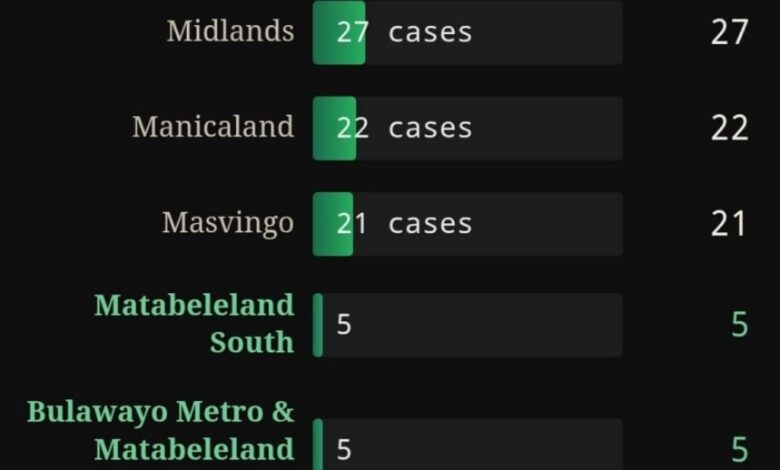
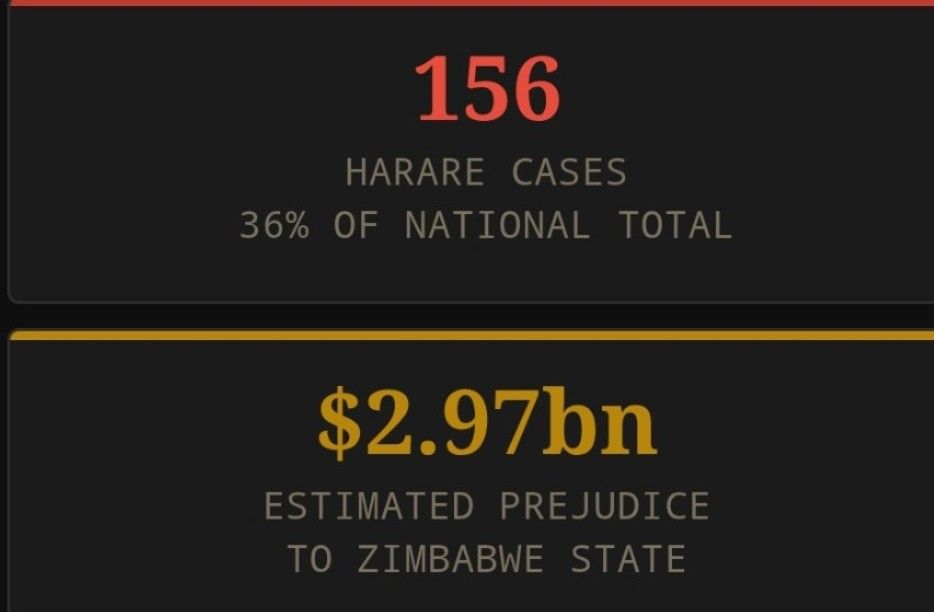
Of the 431 cases the Commission recommended for further investigation nationally, Harare Metropolitan accounted for 156 — representing 36 percent of the national total. Mashonaland East recorded 120 cases, the second highest figure, followed by Mashonaland West with 50. Midlands returned 27 cases, while Manicaland and Masvingo recorded 22 and 21 respectively.
The Matabeleland provinces told a sharply different story. Matabeleland South recorded five cases. Bulawayo Metropolitan and Matabeleland North, which the Commission grouped together in its report, also recorded five cases combined. Together, all three Matabeleland regions accounted for approximately 3.5 percent of the 431 cases referred for investigation — despite covering a substantial portion of Zimbabwe’s geographic area.
The Commission’s Executive Summary did not explain the reasons for the regional disparity. Whether the lower figures reflect lower levels of corruption, less pressure from urban development, more effective local administration, or a difference in the scale of inquiry conducted in those areas remains unclear from the published findings.
[INSERT DATA VISUAL HERE]A system built on abuse
Across Zimbabwe, the Commission described a land governance system that had been systematically abused over two decades. It found widespread illegal sale of urban state land, abuse of political office and the emergence of politically connected individuals — described in the report as “land barons” — who allegedly sold state land without legal authority and without accounting to the state for the proceeds.
The inquiry found that some sitting and aspiring Members of Parliament had allegedly created informal settlements as a deliberate strategy for mobilising political support ahead of elections. In other instances, the names of senior ruling party figures were allegedly used to apply pressure on government institutions and officials to approve or overlook irregular land allocations and title transfers.
The Commission estimated that government recovered less than ten percent of the intrinsic value of the urban state land involved in the transactions it investigated. Total estimated prejudice to the Zimbabwean state was put at approximately US$2.97 billion — a figure reflecting the cumulative impact of improperly valued land, unrecovered payments and proceeds that were never remitted to public accounts.
People living without basic services
Beyond the financial losses, the Commission documented the human cost of years of unplanned and unregulated urban expansion. Settlements across the country were found to have been established without roads, sewerage systems or access to potable water. In a number of cases, development had proceeded on wetlands, beneath high-voltage power lines and on land that had been reserved for schools, clinics and other public facilities — in some instances without approved engineering designs for roads, water or sewer reticulation.
The Commission warned that unsanitary conditions in affected settlements posed a direct public health risk. It found that pit latrines had in some areas been constructed in close proximity to water sources, contaminating underground supplies and creating conditions that could trigger outbreaks of waterborne disease.
Providing the roads, sewer systems and water infrastructure that affected settlements across Zimbabwe now require would cost an estimated US$2.5 billion, according to the Commission’s assessment.
What happens next
The 431 cases identified by the Commission were referred to three institutions for follow-up action: the Zimbabwe Anti-Corruption Commission, the National Prosecuting Authority of Zimbabwe and the Zimbabwe Republic Police.
Among its broader recommendations, the Commission called for investigations into government officials and private individuals involved in land allocations, valuations and title transfers since 2005. It also recommended tighter regulation of housing cooperatives, which it found had been used in some instances as vehicles for irregular land acquisition, and called for stronger enforcement mechanisms to prevent the future illegal sale of urban state land.
KEY FIGURES
431 — Total cases recommended for investigation nationally
156 — Cases in Harare Metropolitan, the highest of any province
120 — Cases in Mashonaland East, the second highest
5 — Cases in Matabeleland South (joint lowest nationally)
5 — Cases in Bulawayo Metropolitan and Matabeleland North combined (joint lowest nationally)
US$2.97 billion — Estimated total financial prejudice to the Zimbabwean state
Less than 10% — Proportion of land value recovered by government
US$2.5 billion — Estimated cost of providing infrastructure to affected settlements
ABOUT THE COMMISSION
The Commission of Inquiry into the Sale of State Land in and Around Urban Areas Since 2005 was established under the Presidential Powers (Temporary Measures) Act in 2018. It was chaired by Justice Tendai Uchena and tasked with investigating land sales, allocations and related practices across all ten provinces of Zimbabwe. Its recommendations are not binding but were directed at the Zimbabwe Anti-Corruption Commission, the National Prosecuting Authority and the Zimbabwe Republic Police for further action.