
When Sport Meets Conservation: RCCL and Painted Dog Conservation Take Wildlife Message to Hwange

Providence Moyo
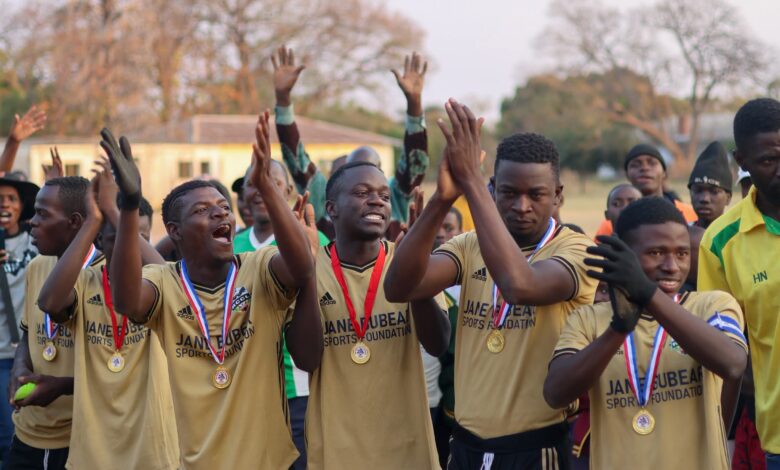
The football pitch at NRZ Grounds in Hwange was transformed into more than a sporting arena on Monday as the Rhino Cup Champions League Zimbabwe (RCCL) partnered with Painted Dog Conservation (PDC) to use sport as a platform for promoting wildlife conservation and environmental awareness.
The partnership brought together sport and conservation in an effort to engage communities, particularly young people, in conversations about the importance of protecting wildlife and preserving the environment.
With players competing on the field and community members gathered around the sporting activities, the event created an opportunity to take conservation messages beyond conventional awareness meetings and directly into a space where people interact, socialise and participate.
For Painted Dog Conservation, community engagement is an important part of protecting wildlife and strengthening relationships between communities and the natural environment.
Speaking to Mat Pulse, PDC Community Liaison Officer Primrose Sibanda said the partnership with RCCL was providing an innovative way of taking conservation messages to young people.
“Through our partnership with the Rhino Cup Champions League Zimbabwe, we are using sport as a platform to take conservation messages directly to communities. We want young people to understand that wildlife conservation is not only the responsibility of conservation organisations, but something that requires everyone’s participation. By bringing these conversations onto the sporting field, we are creating an environment where young people can learn, engage and become ambassadors for the protection of our wildlife and natural environment,” said Sibanda.
The use of sport as a conservation tool is particularly significant in Hwange, where communities live alongside one of Zimbabwe’s major wildlife landscapes.
The area is home to diverse wildlife, including the endangered African painted dog, making community participation an important component of conservation efforts.
Rather than restricting conservation education to formal meetings and workshops, the RCCL-PDC partnership takes the message into a space that is familiar and attractive to young people.
Football has a strong following across Zimbabwe and has the ability to bring together people from different backgrounds. This makes sporting events an effective platform for creating conversations around social and environmental issues.
At the NRZ Grounds, the sporting activities therefore became an entry point for broader discussions about wildlife protection, environmental responsibility and the role of communities in conservation.
The initiative also highlights the importance of involving young people in conservation conversations.
Young people are not only future leaders but can also influence attitudes and behaviour within their families and communities. Engaging them through activities they enjoy can help make conservation messages more accessible and relatable.
For PDC, such community-based engagement is important because the future of wildlife conservation is closely linked to the relationship between people and their environment.
Human activities can have significant consequences for wildlife, while the loss of biodiversity can also affect communities that depend on healthy ecosystems.
The conservation of painted dogs, therefore, cannot be separated from the communities living around their habitats.
The RCCL-PDC partnership demonstrates how organisations from different sectors can work together to address environmental challenges.
While RCCL brings the power of sport and youth engagement, PDC brings conservation knowledge and experience, creating an opportunity for the two sectors to reinforce each other’s work.
The event also challenges the traditional perception that conservation is solely the responsibility of wildlife authorities, conservation organisations and park officials.
Instead, it presents conservation as a shared responsibility involving communities, young people, sporting organisations and other stakeholders.
For participants at NRZ Grounds, the event was consequently about more than the outcome of the sporting activities.
It offered an opportunity to connect recreation with environmental education and to encourage young people to think about their relationship with wildlife and the environment.
The real impact of the initiative, however, will extend beyond the sporting field.
Its success will ultimately depend on whether the conversations sparked at NRZ Grounds continue in homes, schools, sporting clubs and communities, and whether participants become more conscious of their role in protecting Zimbabwe’s natural heritage.
The partnership between RCCL and Painted Dog Conservation shows that conservation messages do not always have to begin in a classroom, conference room or national park.
Sometimes, they can begin on a football pitch, where competition brings people together and creates an opportunity for a much bigger conversation.
At NRZ Grounds, sport became more than a game. It became a vehicle for conservation — demonstrating that when communities come together, the sporting field can also become a platform for protecting wildlife.