Michelle Moyo
BULAWAYO — Transparency International Zimbabwe (TIZ) has launched a one-year project aimed at strengthening engagement between Bulawayo City Council and residents as the city continues to face challenges with water supply, waste collection, wastewater treatment and road maintenance.
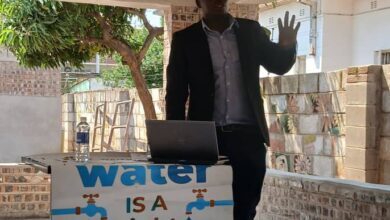
The Citizen Engagement for Responsive and Accountable Governance in Zimbabwe (CERAG) project was launched at an inception meeting for councillors held at Cresta Churchill Hotel in Bulawayo.
Running from 1 October 2026 to 30 September 2027, the project seeks to give residents, particularly those in high-density suburbs, a greater voice in discussions about public resources and service delivery.
TIZ Executive Director Tafadzwa Chikumbu said the initiative would facilitate dialogue between council and residents rather than implement services directly.
“We will try to bridge together the gap, leaving no one behind. Our CERAG project is about making sure that every citizen in Bulawayo, especially in the high-density suburbs, has a voice in how public resources are managed,” Chikumbu said.
He said the project would provide strategic support to both council and residents, adding that meaningful progress would require both parties to participate in discussions.
“The idea is to bring everyone to the table, agree on something, and then move forward together,” he said.
Chikumbu said the inception meeting also aimed to establish councillors’ ward priorities, clarify the responsibilities of monitors, hubs, and TIZ, and agree on communication channels for the October to December 2026 period.
TIZ Head of Programmes Nqobani Tshabangu outlined the city’s service delivery challenges, citing figures presented under the organisation’s Bulawayo’s Services in Numbers.
Tshabangu said water shedding of up to 72 hours remained in force as of July 2026, despite supply dams being between 65 and 66 percent full. He put the city’s daily water supply deficit at 45 megalitres and said 42 percent of treated water was lost through leaks from aging pipes.
He also said all five wastewater treatment plants had failed Environmental Management Agency (EMA) standards in August 2025.
On solid waste management, Tshabangu said only three to five of the city’s 20 refuse compactors were working on a typical day.
He added that more than 75 percent of Bulawayo’s 2,530-kilometre road network was past its economic life, while residents accounted for 71 percent of the debt owed to council.
According to Tshabangu, nine of the 13 findings raised by the Auditor-General remained unresolved, citing the 2024 report.
The figures point to challenges across several essential municipal services, although the dates attached to the different indicators vary, with some relating to 2024 and 2025 and others to July 2026.
Ward 26 Councillor Mpumelelo Moyo said the project should address accountability by council while also encouraging residents to take responsibility for their role in maintaining municipal services.
Moyo said council’s service delivery efforts could be undermined when residents continued to dump waste at illegal sites or vandalise public infrastructure.
“We would appreciate it if organisations like TI could also amplify where councils do well. For example, in refuse collection, Council collects refuse every week in each suburb, but you find that afterwards, residents dump at illegal dumpsites. That becomes costly for us,” Moyo said.
He said residents also needed to be encouraged to pay their municipal bills, arguing that revenue collection and responsible use of public infrastructure were important parts of service delivery.
“Service delivery is a two-way street. Because if we pay our bills promptly, then we as Council can then provide them with adequate service delivery,” he said.
CERAG’s stated approach is to bring council and residents together to discuss service delivery priorities, responsibilities, and communication. Its effectiveness will depend on the extent to which these engagements lead to responses to residents’ concerns and improvements in municipal accountability.