

KAZA Ministers Approve Conservation Funding, Wildlife Survey Plans as Elephant Management Remains Key Priority

Jonathan Sibanda
VICTORIA FALLS – Ministers from the five partner states of the Kavango Zambezi Transfrontier Conservation Area (KAZA TFCA) have approved a series of measures aimed at strengthening conservation, tourism development and regional cooperation, while reaffirming the need for coordinated wildlife management across the world’s largest transfrontier conservation landscape.
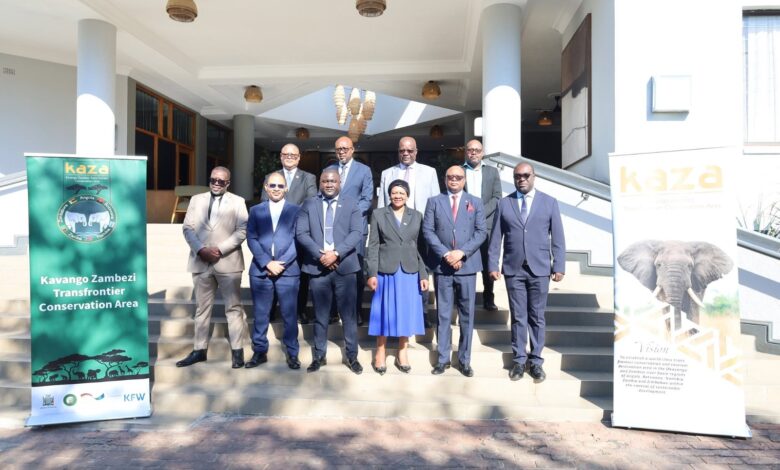
The resolutions were adopted during the 16th KAZA TFCA Ministerial Committee Meeting held in Victoria Falls on Friday.
Among the key decisions was the approval of technical planning for a synchronised survey of large herbivores across the KAZA landscape. The survey is expected to provide critical data to support wildlife conservation, population monitoring and long-term management planning across Angola, Botswana, Namibia, Zambia and Zimbabwe.
The development comes as elephant management continues to draw regional and international attention, with KAZA hosting the world’s largest transfrontier elephant population.
Earlier this week, Permanent Secretary in the Ministry of Environment, Climate and Wildlife Simon Masanga indicated that sustainable elephant management and wildlife trade were expected to feature prominently in discussions.
“Within the region, we have one of the biggest populations of elephants and it has always been an issue at CITES meetings,” Masanga said in an interview shared by ZimParks.
He said the transboundary movement of elephants highlights the importance of cooperation among KAZA partner states.
“There is no particular elephant herd that we can say belongs to Zimbabwe. Tomorrow they can wake up in Botswana, Zambia or Angola. That’s why these transfrontier conservation areas were established in the first place,” he said.
The Ministerial Committee also endorsed measures to strengthen resource mobilisation and leverage funding opportunities from international partners, including the Africa Keystone Protected Area Partnership and the Global Environment Facility.
In a significant boost for the conservation area, ministers welcomed the allocation of €500,000 from the Federal Republic of Germany towards the establishment of permanent offices for the KAZA Secretariat. The meeting also acknowledged confirmation of a further €6 million in German support over four years beginning in 2027.
Ministers further noted progress in implementing resolutions adopted at the 2024 KAZA Heads of State and Government Summit. These include the development of the KAZA Conservation Strategy and Action Plan, Integrated Development Plans and ongoing efforts to strengthen the KAZA tourism destination brand.
The communiqué also highlighted advances in transboundary law enforcement, including joint patrols involving Botswana, Zambia and Zimbabwe, the training of 796 officers at border posts since 2021, and the development of customised Convention on International Trade in Endangered Species of Wild Fauna and Flora (CITES) Standard Operating Procedures for partner states.
Additional progress was reported through specialist working groups focusing on elephants, forestry, animal health, carnivore conservation, safety and security, finance and legal matters.
Covering approximately 520,000 square kilometres across Angola, Botswana, Namibia, Zambia and Zimbabwe, the KAZA TFCA serves as a flagship regional conservation initiative promoting biodiversity protection, sustainable natural resource management and tourism-led economic development.