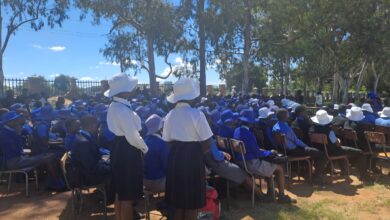

MP Sibanda Throws Lifeline to Menyezwa Primary School with Football Kit Donation, Urges Self-Reliance


Thembelihle Mhlanga
LUPANE – Lupane West Member of Parliament Mxolisi Charles Sibanda has donated football kits to Menyezwa Primary School in Matabeleland North, offering a timely boost to the school’s sports programme while encouraging the institution to pursue long-term financial sustainability through income-generating projects.
The donation comes as many rural schools continue to grapple with limited resources, forcing them to balance academic priorities with extracurricular activities such as sport. For institutions like Menyezwa Primary, purchasing sports equipment often proves difficult due to constrained budgets and competing needs.
Receiving the football kits on behalf of the community, Menyezwa Ward Councillor Thando Ndaba expressed gratitude for the donation, saying the school had struggled to secure essential sporting equipment and other learner support resources.
She said the shortage had become so severe that she personally approached the legislator to seek assistance for the school’s struggling sports department.
“The school is struggling to acquire needed social amenities for the learners, which is why I made it a point to request these kits directly from the MP. Our children deserve the same opportunities to develop their talents as those in urban areas, but our resources are incredibly stretched,” said Ndaba.
She said the donation would help create opportunities for learners to participate more effectively in sporting activities despite the challenges faced by many rural schools.
The school’s Sports Director, Siphephile Moyo, also welcomed the donation, describing it as a significant relief for an institution operating with limited financial resources.
According to Moyo, purchasing sports equipment has become increasingly difficult, often forcing the school to prioritise other pressing educational needs.
“We thank the MP for this generous gift, which will greatly ease the school coffers. Buying sports equipment is highly prohibitive for a rural school like ours. This donation frees up the little funds we have to focus on other pressing academic needs,” Moyo said.
While handing over the football kits, Sibanda challenged the school administration and the surrounding community to look beyond donations by establishing sustainable income-generating projects that could strengthen the institution’s long-term development.
He encouraged the school to make productive use of its available land by investing in agricultural ventures such as poultry and piggery projects, saying these could provide a reliable source of income to support school operations.
The legislator said relying solely on external assistance was not sustainable and urged communities to embrace self-reliance by creating initiatives capable of funding their own development priorities.
“I urge the school to start projects like poultry and piggery that will see the school turn into robust development. We must cultivate a culture of self-reliance. By running successful agricultural projects, the school can generate its own revenue to build classrooms, buy textbooks, and fund its own sports programmes without waiting for external assistance,” Sibanda said.
The MP’s remarks shift the focus beyond immediate assistance to the broader challenge of ensuring that rural schools are financially resilient. Income-generating projects have increasingly been promoted in many Zimbabwean schools as a way of supplementing limited budgets while creating practical learning opportunities for pupils.
Parents and community members who witnessed the handover welcomed both the donation and the legislator’s call for self-reliance. They noted that Menyezwa Primary School has land that has remained underutilised for years, presenting an opportunity to establish commercial agricultural projects that could generate revenue for the institution.
Community members expressed hope that, with the sports department receiving much-needed support, attention could now turn to developing poultry and piggery projects capable of strengthening the school’s financial future and reducing its dependence on external assistance.
The donation not only provides immediate support for learners’ sporting activities but also opens a wider conversation on how rural schools can combine community partnerships with sustainable development initiatives to improve educational outcomes and build resilience for the future.