


Tendai Nyambara
BULAWAYO, Zimbabwe — The Fight Inequality Alliance Zimbabwe (FIA-Zw) has called for increased investment in public healthcare, arguing that Zimbabwe’s spending priorities continue to leave ordinary citizens with failing health services while resources are directed towards debt obligations and major infrastructure projects.
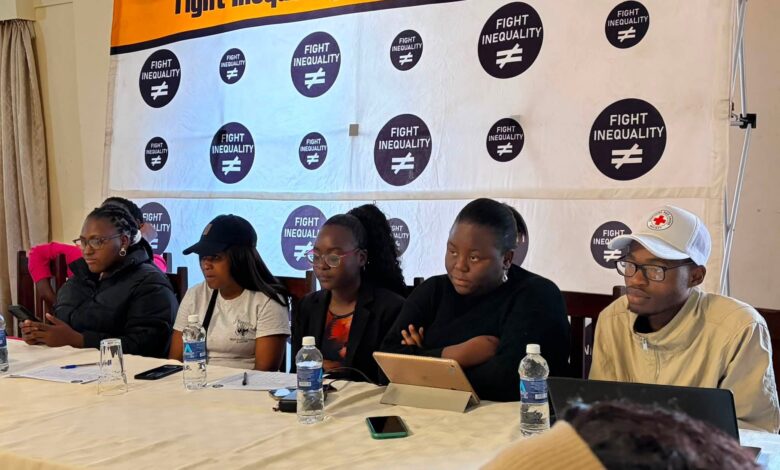
The concerns were raised during a workshop in Bulawayo to mark the Global Day for Fighting Inequality, where participants discussed the links between inequality, public finance, and access to healthcare.
FIA-Zw National Coordinator Nqobizitha Mlambo said the organisation advocates for vulnerable and marginalised communities disproportionately affected by economic injustice.
“We are a global movement made up of different structures in society—particularly those who are vulnerable, poor, marginalised, and from low-income areas,” Mlambo said.
Founded globally in 2016, the Fight Inequality Alliance campaigns against widening wealth disparities and advocates for social and economic justice.
Mlambo cited Zimbabwe’s Gini coefficient of 52.3, saying the figure places the country among the world’s most unequal societies.
“It means we have a highly unequal society. Inequality is a serious matter in our context. That is why we have the Fight Inequality Alliance in Zimbabwe.”
The discussion then shifted to the management of public finances and whether national resources are being used in line with constitutional principles.
FIA National Council member Yollander Millin pointed to Section 298 of the Constitution of Zimbabwe, which outlines the principles of public finance management, arguing that public resources should ultimately benefit citizens through quality services and infrastructure.
“We are looking at the system of how money is collected and how it is used, with the idea at the end of the day to make it work for everyone, particularly the marginalised,” she said.
Millin said citizens contribute to the national treasury through taxes and are therefore entitled to see those resources returned in the form of functioning public services.
“Whatever money people put into the state’s pocket should be for the betterment of the people. It is money that is supposed to come back to us through positive public services.”
Participants also criticised what they described as an unprogressive taxation system that places a heavier burden on ordinary citizens while allowing the wealthy to avoid paying their fair share.
The Alliance questioned national spending priorities, contrasting major infrastructure projects with the state of public hospitals.
“A lot of money goes into paving or into the airport,” Millin said. “But look at the quality of the hospitals we are using. We know the stories of people being told to bring their own beds.”
The concerns form part of the Alliance’s #FixOurPublicHealth campaign, which argues that public healthcare has suffered as resources have been diverted away from essential services.
Participants also debated Section 76 of the Constitution of Zimbabwe, which guarantees the right to healthcare but states that the government must take reasonable measures to realise that right “within the limits of the resources available to it.”
Some attendees argued that this provision makes it difficult to hold the state accountable for shortcomings in healthcare delivery because authorities can cite limited resources and fiscal pressures.
Questions were also raised about revenues generated from taxes on products such as sugary drinks and fast foods, which participants said had been promoted as mechanisms to support healthcare initiatives, including cancer treatment infrastructure.
The Alliance said communities should consider strategic petitioning and legal advocacy aimed at strengthening socio-economic rights and ensuring that public spending places greater emphasis on essential services, particularly healthcare.
As Zimbabwe continues to grapple with economic challenges and widening inequality, the organisation says the country’s long-term development depends on ensuring that public resources are used to improve the lives of ordinary citizens rather than leaving them, in its words, “dying in the shadow of debt.”