
Road of Deaths: Wildlife, Roadkill and a Growing Safety Crisis Near Hwange National Park


Tinomuda Marava
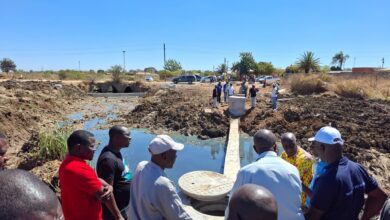
A temporary bypass near Hwange National Park has become a killing field for Zimbabwe’s iconic wildlife — and conservationists warn that without urgent action, the damage may prove irreversible.
The sun has barely set when the danger begins.
Along the makeshift detour linking Bulawayo and Victoria Falls near Hwange National Park, headlights cut through the darkness and animals materialise without warning: an elephant stepping silently from the bush, a hyena pausing mid-road, a civet frozen in the glare. For many, it is the last moment of their lives.
What was introduced as a practical solution to ongoing road rehabilitation along one of Zimbabwe’s busiest transport corridors has evolved into a growing ecological and public safety crisis. The temporary detour cuts directly through wildlife movement corridors that animals have used for generations, transforming a short-term inconvenience into a potentially long-term threat to one of Africa’s most celebrated wilderness areas.
Hwange National Park spans more than 14,600 square kilometres and supports one of the continent’s largest elephant populations, alongside lions, buffaloes, African wild dogs, spotted hyenas and hundreds of bird species. The park’s biodiversity is its identity and lifeline, sustaining a tourism industry that attracts visitors from across the world. Yet the detour now bisects ecosystems that have long allowed wildlife to move freely between feeding grounds, water sources and breeding areas.
Night-time travel along the route is particularly dangerous for both animals and motorists. Elephants and buffaloes, some weighing several tonnes, can emerge abruptly from the tree line, leaving drivers with little time to react. Collisions involving animals of this size can be devastating and, in some cases, fatal for vehicle occupants.
Smaller species fare no better. Jackals, civets, genets and hares are routinely struck by passing vehicles, their deaths often going unreported and unrecorded. Conservation officers working in the area acknowledge that the true scale of wildlife mortality along the detour remains unknown.
Without systematic monitoring or a formal reporting mechanism, many incidents disappear without documentation, leaving significant gaps in the data needed to assess the full impact of the road.
The dangers extend beyond wildlife.
Schoolchildren travelling by bus, local motorists and long-haul truck drivers all face increasing risks from heavy dust, poor visibility and deteriorating road conditions marked by potholes and uneven surfaces. Combined with frequent wildlife crossings, these factors have created a hazardous environment where a serious accident is never far away.
While public attention is often drawn to the loss of iconic species such as elephants, conservationists warn that the threat to human life is equally concerning. A collision between a small vehicle and a young elephant could easily result in multiple fatalities. Likewise, a crash involving a passenger bus or heavy truck and a large elephant could have catastrophic consequences, causing serious injuries or significant loss of life.
The combination of speeding vehicles, thick dust clouds, damaged roads and regular wildlife crossings has created a dangerous situation for both people and animals.
Conservation advocates say there is an urgent need for authorities to improve road conditions, strengthen traffic enforcement and introduce wildlife-crossing warning systems before tragedy strikes.
Beyond the visible toll of roadkill lies a less obvious but equally damaging problem: habitat fragmentation.
Roads divide ecosystems into isolated patches, disrupting the natural movement patterns on which wildlife depends. Water sources, seasonal grazing grounds and breeding areas that were once easily accessible can become separated by a barrier of traffic, noise and human activity.
For many species, crossing the road becomes a risk-filled necessity rather than a natural part of daily movement.
The consequences ripple throughout the ecosystem. Large predators such as lions and African wild dogs, which are sensitive to human disturbance, may avoid areas near busy roads altogether, reducing the space available to them and increasing competition elsewhere. Scavengers drawn to roadside carcasses face repeated exposure to traffic, while stressed animals often alter their feeding and resting patterns, weakening their health and reducing reproductive success over time. Piece by piece, the road erodes the ecological integrity of the park from within.
For tourism operators around Hwange, the growing crisis is not merely a conservation concern but an economic one. Zimbabwe’s wildlife tourism sector has worked hard to rebuild its reputation in recent years, and the sight of roadside carcasses or visibly disturbed wildlife risks undermining that progress. Visitors who travel thousands of kilometres in search of an authentic wilderness experience may instead leave with images of loss and disruption.
“People come here to see Africa as it should be,” one tourism operator said. “Every animal killed on that road is a story we cannot tell anymore.”
Conservationists and wildlife experts are calling for immediate and coordinated action. Among the measures being proposed are reduced speed limits through wildlife-sensitive areas, clearly visible wildlife-crossing signage, increased night-time patrols and speed enforcement, dedicated crossing structures for large animals where feasible, and the creation of a formal wildlife-collision reporting system to improve monitoring and response efforts.
Public awareness is equally critical. Drivers, whether local commuters, commercial transport operators or tourists, need to understand that this is not an ordinary stretch of road. It is a shared landscape, and the animals crossing it have no understanding of the danger they face.
The Bulawayo–Victoria Falls detour represents, in miniature, the challenge Zimbabwe faces as it pursues infrastructure development alongside conservation commitments. Roads must be built and maintained, and economies must grow. But growth that erodes the natural heritage on which communities, tourism and ecosystems depend is not progress — it is a debt deferred.
Hwange National Park has survived drought, poaching and political uncertainty. It should not fall victim to a detour road. The window for intervention remains open, but it is narrowing with every vehicle that speeds through the darkness and every animal that does not survive the night.