

Jonathan Sibanda
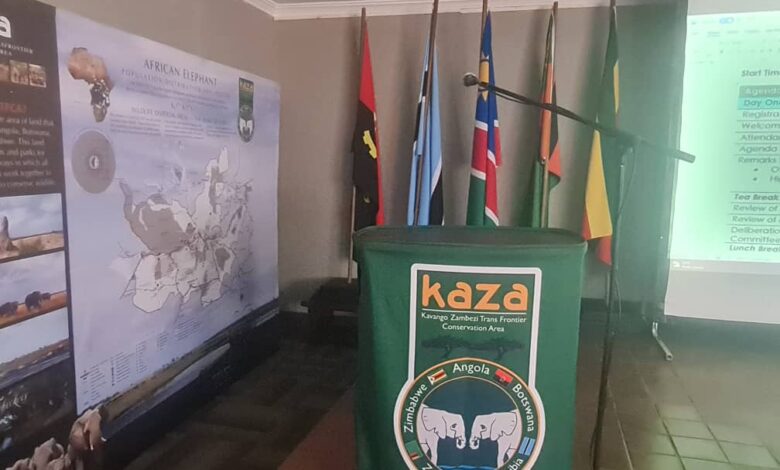
Sustainable elephant management and the future of wildlife trade are likely to feature prominently in discussions during this week’s Kavango Zambezi Transfrontier Conservation Area (KAZA TFCA) Structure Meetings underway in Victoria Falls.
In an interview provided by ZimParks today, Permanent Secretary in the Ministry of Environment, Climate and Wildlife Mr Simon Masanga said elephant management remains a major issue for countries within the KAZA landscape, which is home to the world’s largest transfrontier elephant population.
“Within the region, we have one of the biggest populations of elephants and it has always been an issue at Convention on International Trade in Endangered Species of Wild Fauna and Flora (CITES) meetings,” said Masanga.
He said KAZA member states are expected to continue discussions around wildlife trade and the utilisation of elephant products, an issue that has remained on the agenda for many years.
According to Masanga, Zimbabwe has already received provisional approval to utilise elephant leather in the production of tradable goods and is encouraged by what he described as a gradual softening of positions within the Convention on International Trade in Endangered Species of Wild Fauna and Flora (CITES).
“We see gradual softening on the part of CITES and we will galvanise support from within the region,” he said.
Masanga noted that the transboundary nature of elephant populations makes regional cooperation essential, as wildlife frequently moves across borders between Angola, Botswana, Namibia, Zambia and Zimbabwe.
“There is no particular elephant herd that we can say belongs to Zimbabwe. Tomorrow they can wake up in Botswana, Zambia, Angola. That’s why these transfrontier conservation areas were established in the first place,” he said.
The Permanent Secretary said the KAZA Structure Meetings provide an important platform for member states to coordinate positions on issues affecting wildlife conservation and sustainable natural resource management.
The meetings began with the 21st Joint Management Committee Meeting and will be followed by sessions of the Committee of Senior Officials and the Ministerial Committee later this week.
Masanga also highlighted the growing role of technology in wildlife conservation, revealing that Zimbabwe has adopted information technology and drone-based monitoring systems to enhance oversight of national parks and improve wildlife management.
He said the use of drones and digital monitoring tools would enable authorities to monitor conditions within protected areas more efficiently while strengthening conservation efforts in the face of emerging challenges, including climate change.
The KAZA TFCA Structure Meetings have brought together delegates from Angola, Botswana, Namibia, Zambia and Zimbabwe to discuss regional cooperation, conservation, tourism development and sustainable natural resource management across the world’s largest transfrontier conservation area.